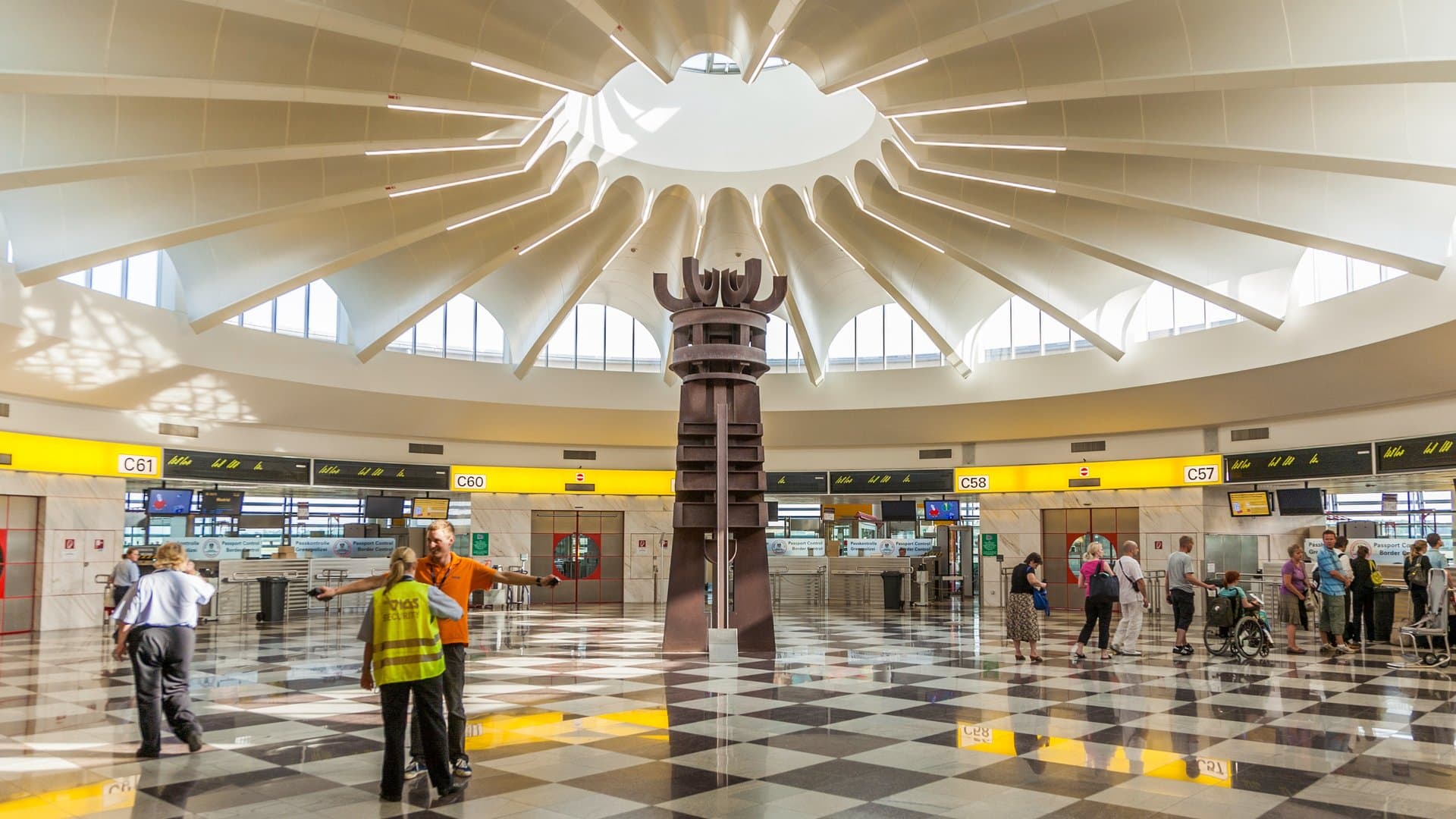
With the "World's Most Beautiful Airports List 2026", the Prix Versailles presented its annual selection of the most architecturally remarkable airports on Monday in Paris. Seven projects from five countries are on the list. These are the winners.
The Prix Versailles has been awarded since 2015 in collaboration with UNESCO and considers itself an international architecture and design prize. The award ceremony traditionally takes place at the UNESCO headquarters in Paris. Projects are honored in several categories, including not only airports but also university buildings, train stations, sports facilities, museums, stores, hotels, and restaurants. The airport category has existed since 2020. The criteria are not only aesthetic quality, but also cultural anchoring, ecological efficiency, and social benefit - values that the United Nations also emphasize.
More Than a Transit Space
Jérôme Gouadain, Secretary General of the Prix Versailles, describes contemporary airports in a press release as defining landmarks of their regions and eras. They must resolve the contradiction between growing travel volume and the need for speed while simultaneously creating spaces that no longer serve merely for transit. According to its own description, the Prix Versailles awards honor "intelligent sustainability", in which culture and environment are considered together.
Frankfurt as German Representative
The only German entry is the new Terminal 3 of Frankfurt Airport, designed by architect Christoph Mäckler. One of Europe's largest infrastructure projects has been created on approximately 1.3 square kilometers, roughly the size of downtown Frankfurt. The design is oriented toward an urban environment: piers, gates, and lounges are laid out like streets and squares. Light natural materials such as Jura limestone and travertine were used, and large glass surfaces provide daylight. Three ring-shaped sculptures made of rotating, colored aluminum disks serve as eye-catchers.
Asia's New Gateways to the World
Four award winners come from Asia. In China, Terminal 3 of Guangzhou Baiyun Airport impressed, designed by Artelia in collaboration with the Guangdong Architectural Design and Research Institute. It combines stylized motifs of clouds, water, and flowers and, according to the Prix Versailles, offers the highest public open-air observation platform at a Chinese airport.
India is represented twice: Terminal 2 in northeastern Indian Guwahati by architect Nuru Karim is modeled after a bamboo orchid and incorporates indigenous art, while Terminal 1 in Navi Mumbai, opened in 2025, follows the design by Zaha Hadid Architects and takes the shape of a lotus flower.
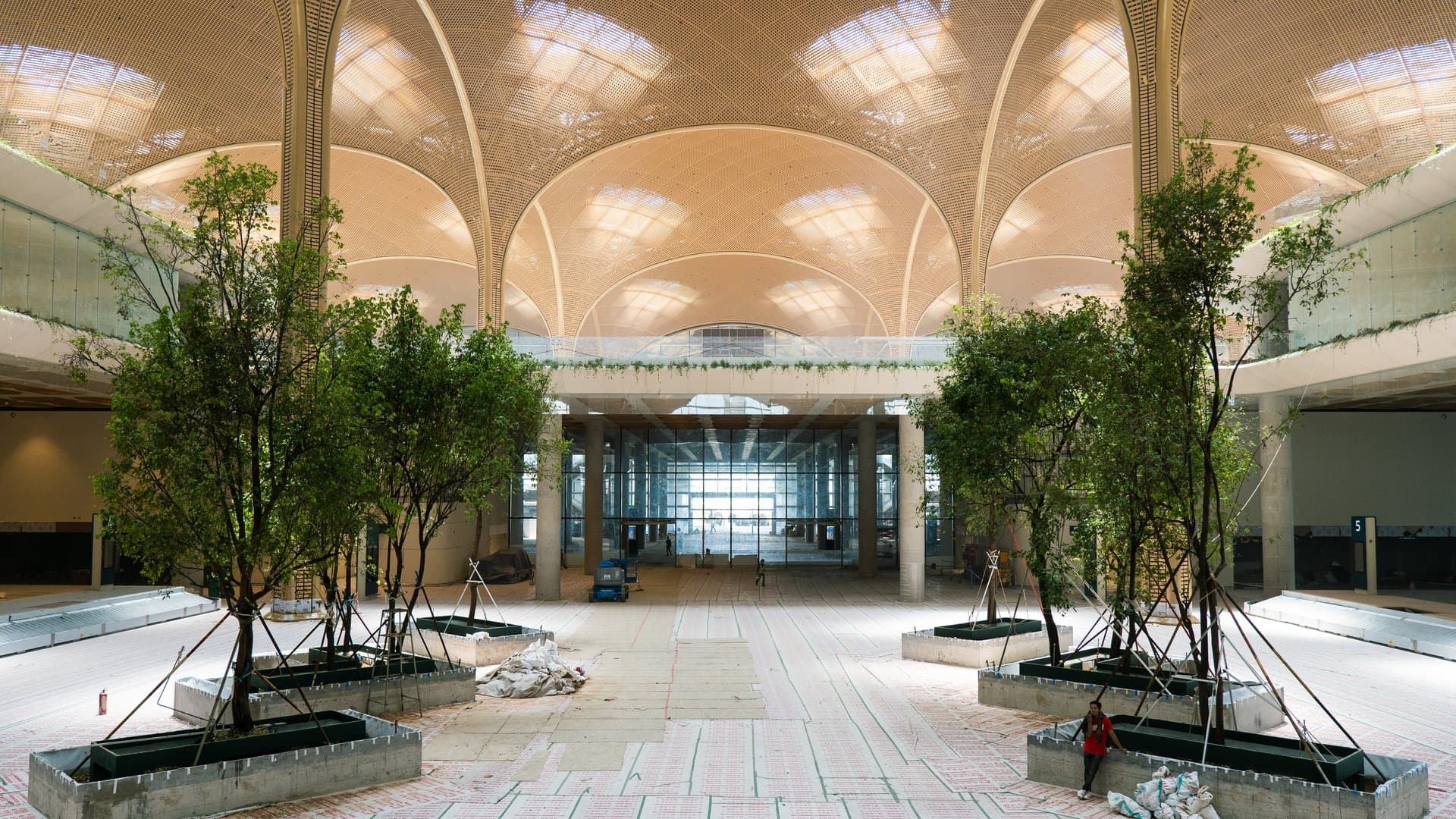
In Cambodia, the Techo International Airport south of Phnom Penh, designed by Foster + Partners, was honored for its ceilings that evoke traditional basket weaving.
Models from the USA
Two projects from the United States made the list. Pittsburgh International Airport, designed by Gensler and HDR with luis vidal + architects, features 38 tree-shaped steel supports and nature-inspired design reminiscent of the region's forests.
In San Diego, the Gensler firm transformed Terminal 1 with a 244-meter-long, curved glass facade created in collaboration with artist and architect James Carpenter. An innovative system that eliminates the need for supporting columns makes the terminal hall appear more open and, according to the Prix Versailles, reduces the carbon footprint by 30 percent.