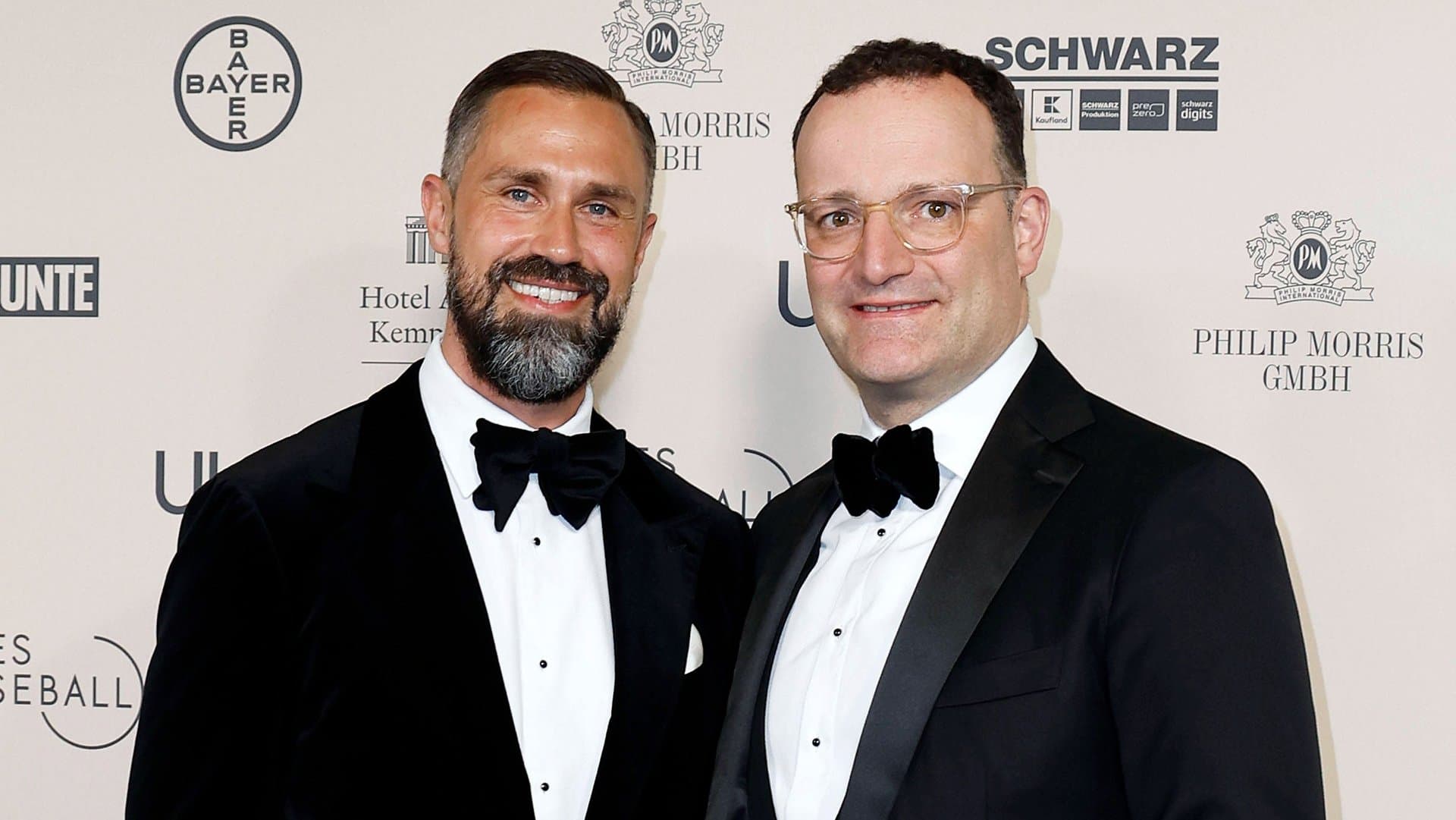
Normally, it would be a private matter when a married couple has a child. However, the fact that CDU politician Jens Spahn (46) recently became a father with his husband Daniel Funke (44) via surrogate in the U.S., while surrogacy is banned in Germany, makes the matter a political issue. After the news became public, calls for his resignation emerged, among other reactions.
"It's simply wonderful, it's a wonderful feeling", Spahn says about fatherhood in the podcast hosted by "Bild" deputy editor Paul Ronzheimer (40). The desire for children was shared by the couple, both are "very much family-oriented people". The couple frequently discussed starting a family with children. Adoption was also fundamentally an option for the two of them.
Jens Spahn: "I struggled with this for a long time"
"I struggled with this for a long time, including on the issue of surrogacy", Spahn continues. "I was torn about this for a long time. But through this struggle and engaging with the issue, we decided on this path." Over the years, the politician examined matters such as what the circumstances are like in the United States.
In a recent commentary, published on the website of "tagesschau", it states: "Everyone is equal before the law. And in the case of surrogacy, the law is clear: it is banned in Germany. There are good reasons for this. That didn't stop Jens Spahn and his husband from making their desire for children a reality with the help of a surrogate in the U.S."
Spahn and his party have repeatedly positioned themselves against surrogacy in the past. According to "tagesschau", the costs for Germans who want to become parents via surrogate in the U.S. range from 100,000 to 250,000 U.S. dollars per child. There, surrogacy has long been a business that is repeatedly criticized as ethically questionable. That accusations of double standards would emerge publicly in such a context is to be expected. In the English-speaking world, including in the U.S., the phrase "Rules for thee but not for me" is common - "rules for you, but not for me".
Spahn is aware of "area of tension"
Beyond his personal decision, Spahn is aware "how the vast majority of my party, probably also my parliamentary group, views this. That's an area of tension. [...] There are questions of church morality, ethical principles, and corresponding clarity. And at the same time, there is life, you know. And as a Christian, especially as a Catholic, I know that one thing is pure doctrine and the other is real life. And that sometimes there is no black and white and no easy decisions."
Spahn suggests he understands accusations of double standards and violations of his role model function. "I can understand that, I have to accept it", the politician explains. However, he says no applicable law was violated. As in Spahn's case, it is fundamentally not prohibited to raise a child born through surrogacy abroad here in Germany. However, brokering surrogacies or medical assistance is prohibited.
Spahn doesn't want to "hide his child from the world", he says in the podcast. The parliamentary group leader wants to engage more extensively with the discussion - and his own party - at a later point. He further explains: "I will face the debate, I just have to strike a balance. [...] It is and remains something very private. I want to protect my family, also protect my son. And at the same time, I know that I'm not just a private citizen. That's clear to me as well."