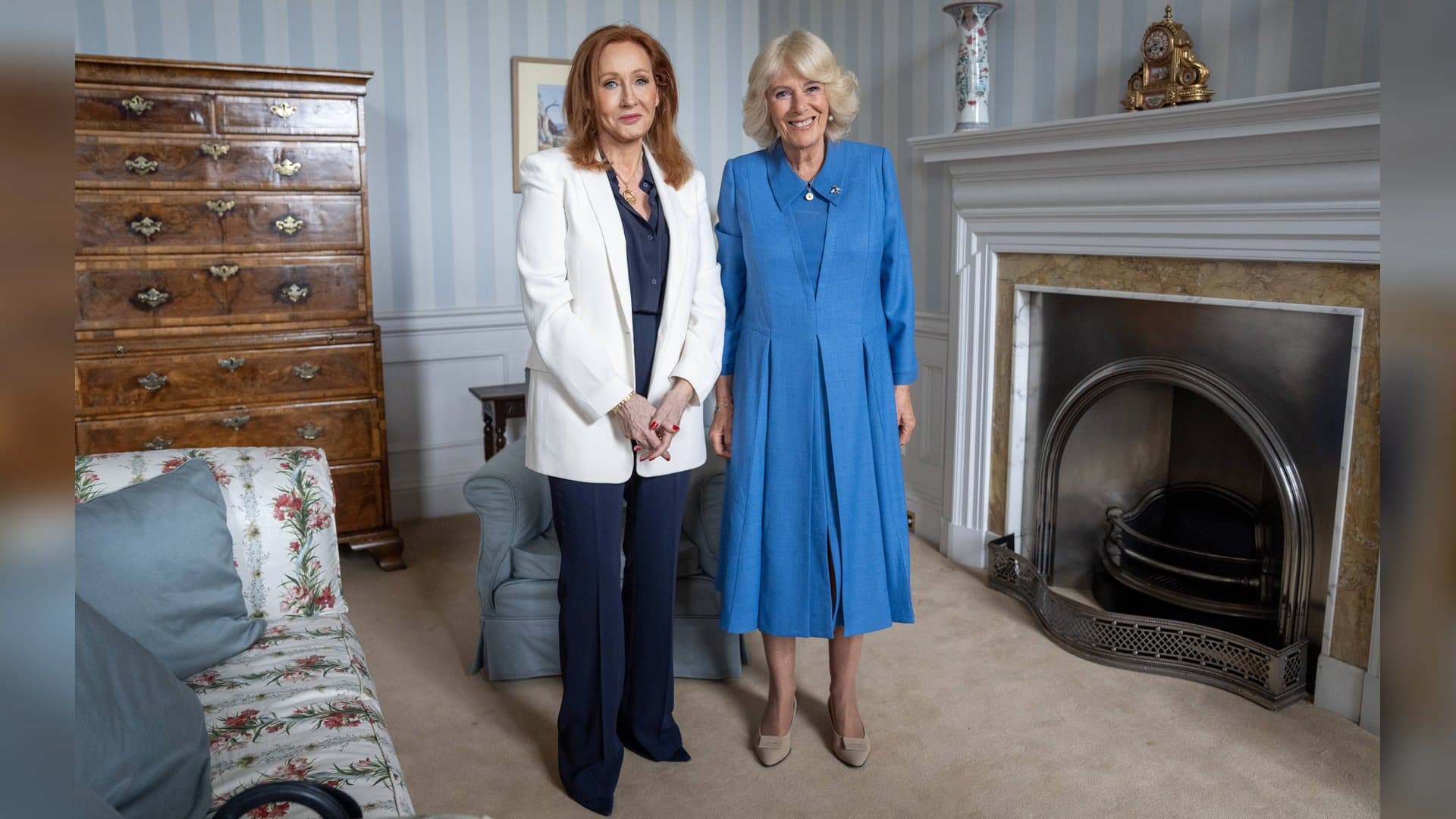
Queen Camilla (78) received "Harry Potter" author J.K. Rowling (60) at the Palace of Holyroodhouse in Edinburgh. According to the royal household, the meeting at the start of Scottish Royal Week focused on the importance of reading for children. The Royal Family's official Instagram account published a photo of the two women standing side by side - Camilla in a deep blue dress, Rowling in a white blazer.
The caption stated that they share "a common passion for books and a deep commitment to children reading for pleasure". The palace continued: "Her Majesty and Ms. Rowling discussed the importance of providing young people with access to books and the crucial role that reading plays in opening doors for future generations."
Criticism: Meeting during Pride Month of all times
The photo immediately sparked criticism online. Rowling has been considered one of the loudest voices in the debate about gender identity for years. Critics accuse her of being anti-trans, which the author rejects. However, many users expressed disapproval that the Queen published the photo in June of all months, which is Pride Month.
In the comments, Camilla was called "pathetic" among other things, and Rowling was called "Queen of the Transphobes". "And during Pride Month no less", wrote one user, while another made it clear: "Trans rights are human rights." However, there were also supporters. Some defended Rowling and referenced her right to her own opinion.
In October 2023, Rowling publicly responded to the statement "Trans women are women" with a brief "No". At the time, she stated that she would go to prison if necessary for her convictions. Her stance led to a break with former "Harry Potter" colleagues such as actors Daniel Radcliffe and Emma Watson, who have publicly distanced themselves from her.
Camilla's commitment to reading
Camilla is patron of several literary organizations. During the coronavirus lockdown, she launched an Instagram book club, which gave rise to the charity "The Queen's Reading Room". As early as 2023, she had encouraged authors not to be held back by those who wanted to "restrict the freedom of your expression" - an appeal made in connection with the revised new editions of children's author Roald Dahl's (1916-1990) books, who also attracted attention for anti-Semitic statements.