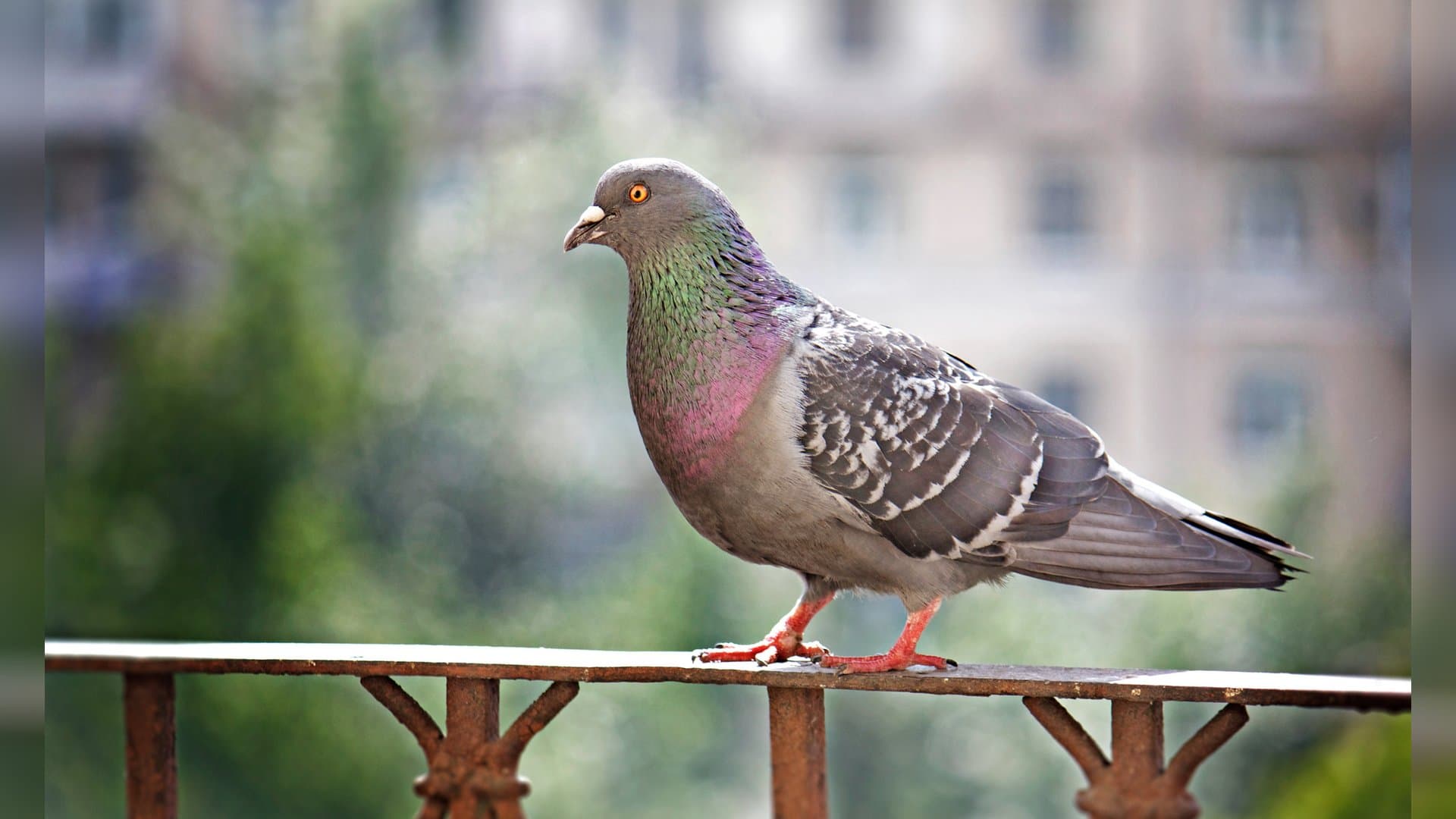
Hardly any animal has such a bad reputation in German cities as the pigeon. Although it has been considered a symbol of peace and love for centuries, many people regard city pigeons with rejection. The birds are insulted as "rats of the sky", shooed away from balconies, or viewed as pests.
Yet their negative image is largely undeserved. City pigeons do not transmit more diseases than other urban birds and are not annoying intruders, but rather descendants of domesticated homing and carrier pigeons. In other words: They are a pet that humans once bred and then abandoned.
According to the German Nature and Biodiversity Conservation Union (NABU), city pigeons have one main problem in urban areas: They can hardly find natural nesting sites and sufficient species-appropriate food anymore. At the same time, they are extremely attached to their location and dependent on human structures. This also explains why they land so frequently on balconies, window ledges, or in courtyards: These places replace the original rock niches where they used to breed.
What to do when pigeons are on the balcony?
Especially in summer, pigeons become particularly visible on balconies, window sills, and house roofs. However, anyone who discovers the animals there does not automatically have to assume there is a problem.
If there is already a nest with eggs or young birds on the balcony, it should not be removed. In Germany, animal welfare regulations apply here, as disturbing nesting sites can be problematic. City pigeon aid organizations or municipal projects offer support in such cases and provide animal welfare-compliant solutions.
If no breeding is taking place, preventive measures help above all: Pigeons generally avoid places that are regularly used and do not offer protected retreat areas. A balcony that remains open and is not equipped with boxes, cushions, or other niches will be chosen as a breeding site much less frequently. Even a certain regularity in use can already help ensure that the animals look for other places.
Pigeons need support in summer - but this should be avoided
Many problems in dealing with city pigeons arise from well-intentioned but incorrect feeding. Bread and food scraps are unsuitable for pigeons, as they contain hardly any nutrients and can cause health damage.
NABU points out that city pigeons need a grain-based diet that corresponds to their natural food. Therefore, feeding only makes sense through supervised pigeon lofts or official feeding stations, where species-appropriate food is provided and the population is controlled.
Water is also important for city pigeons, but often becomes a problem in the city. Although they do not always find clean sources, private water sources on balconies are discouraged, as they pose hygienic risks and can attract other animals in an uncontrolled manner.
Instead, environmental and animal welfare organizations recommend municipal, regulated solutions, where water sources are part of an overall concept of city pigeon care.