Techno, an old potato factory in the middle of Munich, and a love that pits two families against each other: With the miniseries München Beats, ZDF brings a piece of Munich nightlife history to the screen. Four episodes of 45 minutes each will be available for streaming on ZDF starting Friday, August 7, at 10 a.m. On television, the episodes will air on Wednesday, August 26, and Thursday, August 27, each starting at 8:15 p.m. in double features.
What's München Beats About?
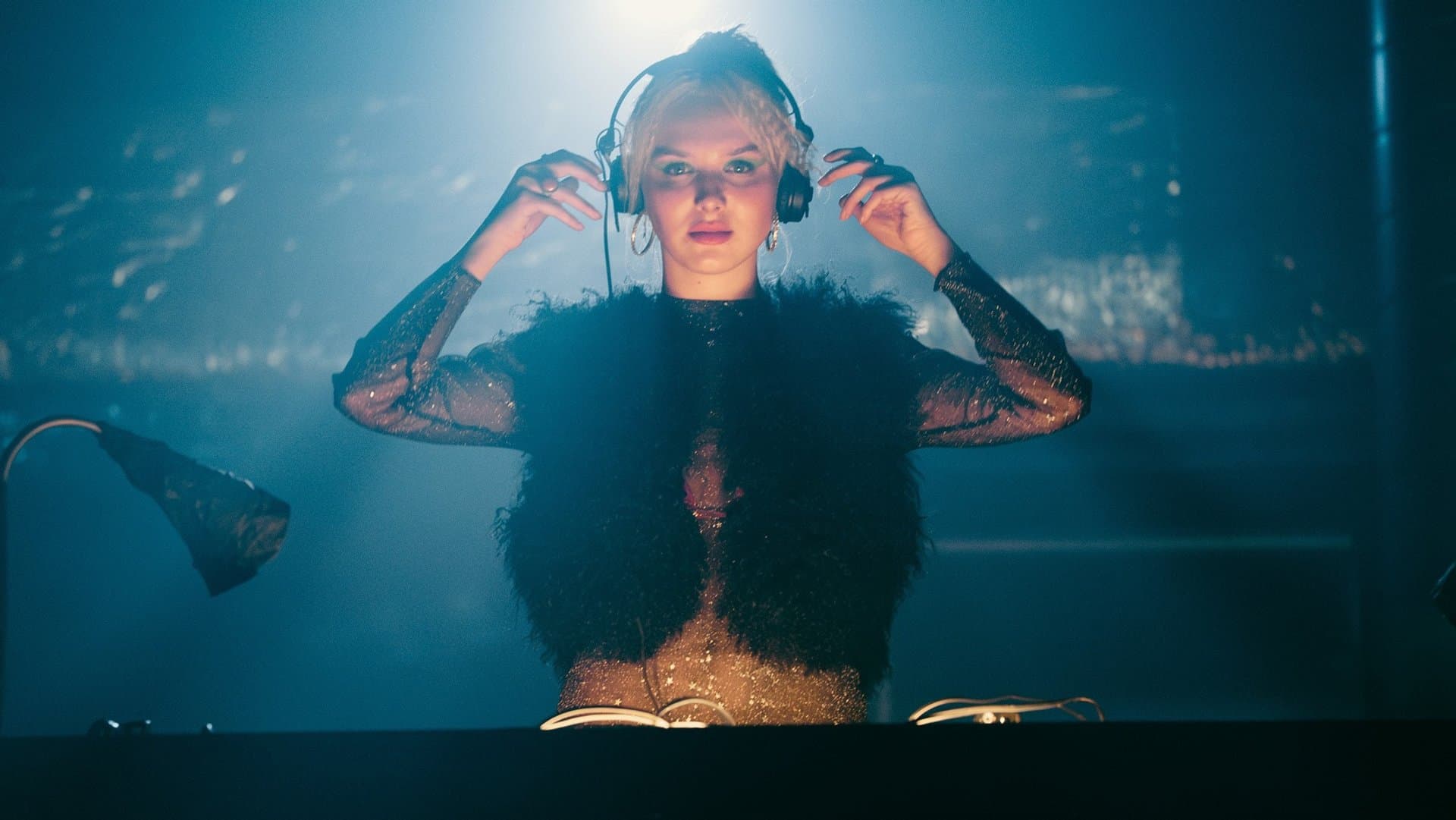
Munich in the 1990s, everything is in flux. For Linda Bierwirth, her parents' farm in Ismaning becomes too confining when she discovers the pulsating sound of the young techno scene in Munich. She moves to the city to become a DJ. Meanwhile, a full-blown crisis is escalating: entrepreneur Theo Meinhardt has to shut down his potato products plant. For many farmers in the region, loyal suppliers for years, their livelihood is at stake. Among the contract farmers: Linda's father.
While Theo wants to turn the factory site into a modern urban district, his son Marius has other plans. He envisions a place for raves and alternative art. In Linda, of all people, he finds his closest ally. But their love not only pits their families against each other, it also brings a long-kept secret to light. Nevertheless, the two establish Kunstpark Ost on the former Pfanni site, what was then Europe's largest party venue.
A second narrative thread is provided by Linda's brother Andi: He's supposed to take over the farm, but discovers in the city that as a young man who is attracted to other men, he can hardly be himself in the confines of village life. The environment around Deutsche Eiche, one of the oldest meeting places for the homosexual scene in Munich, becomes a place of acceptance for him.
The Lead Actors
The story is carried by a large ensemble. Jule Hermann (born 2004) plays aspiring DJ Linda, Klaus Steinbacher the entrepreneur's son Marius. For the role, Hermann even learned the DJ craft. About her first performances, she says in an interview with ZDF: "Crazy. I'm a show-off, but that was a new level of nervousness."
Tobias Moretti (67) can be seen as stern company boss Theo Meinhardt, Sophie von Kessel (57) plays his wife Alicia. Moretti recalls the spirit of the era: "The mood of the 1990s is hard to imagine in our times: that unbridled optimism after the 'Wende,' which also originated in a complete
overestimation of ourselves. Everything seemed possible. For Klaus Steinbacher (32) too, the 1990s seem in retrospect like a time when much seemed possible. We could really use a bit of that confidence today. And we need the courage to actively shape our future. So that we can live in a free and peaceful society," he says.
Ben Münchow (35) portrays Linda's brother Andi. His role, which moves between conservative rural life and the queer scene, is particularly touching. It's not just about Andi's homosexuality, "but also very much about a certain image of masculinity," says Münchow. "This image was extremely narrow back then - and honestly, it hasn't completely disappeared today. A man shouldn't show weakness, shouldn't cry, shouldn't ask for help, should be able to get things done, be able to drink, not be sensitive, and definitely not appear too soft."
The cast also includes Frederic Linkemann, Marlene Morreis, and Tim Seyfi, whose character Harald Prell is inspired by legendary Kunstpark Ost operator Wolfgang Nöth (1943-2021). The series was directed by Mimi Kezele, the script was written by Christian Schnalke, Stefani Straka, and Julie Fellmann. Filming took place entirely in Munich and the surrounding area, including an old factory site in Wolfratshausen.
A Look at the 1990s Worth Taking
München Beats weaves a love story with family drama into a real chapter of Munich city history. The Pfanni works at Ostbahnhof closed in 1996, and from September of that same year, Kunstpark Ost emerged in the empty halls. Techno stars like DJ Hell, Marusha, Sven Väth, and Westbam performed here. After 2003, further concepts as a nightlife area and event center followed. Today, event venues as well as hotels and office buildings can be found there.
The series consciously takes artistic liberties and explicitly notes that while it is "inspired by real events," the characters as well as their professional and private stories are entirely fictional. It is precisely this connection between historical background and fictional narrative that makes München Beats multi-layered. In addition to techno and the spirit of new beginnings, the series also addresses the limits of supposed tolerance and generational conflicts - themes that, looking back at the 1990s from today's perspective, appear surprisingly current.