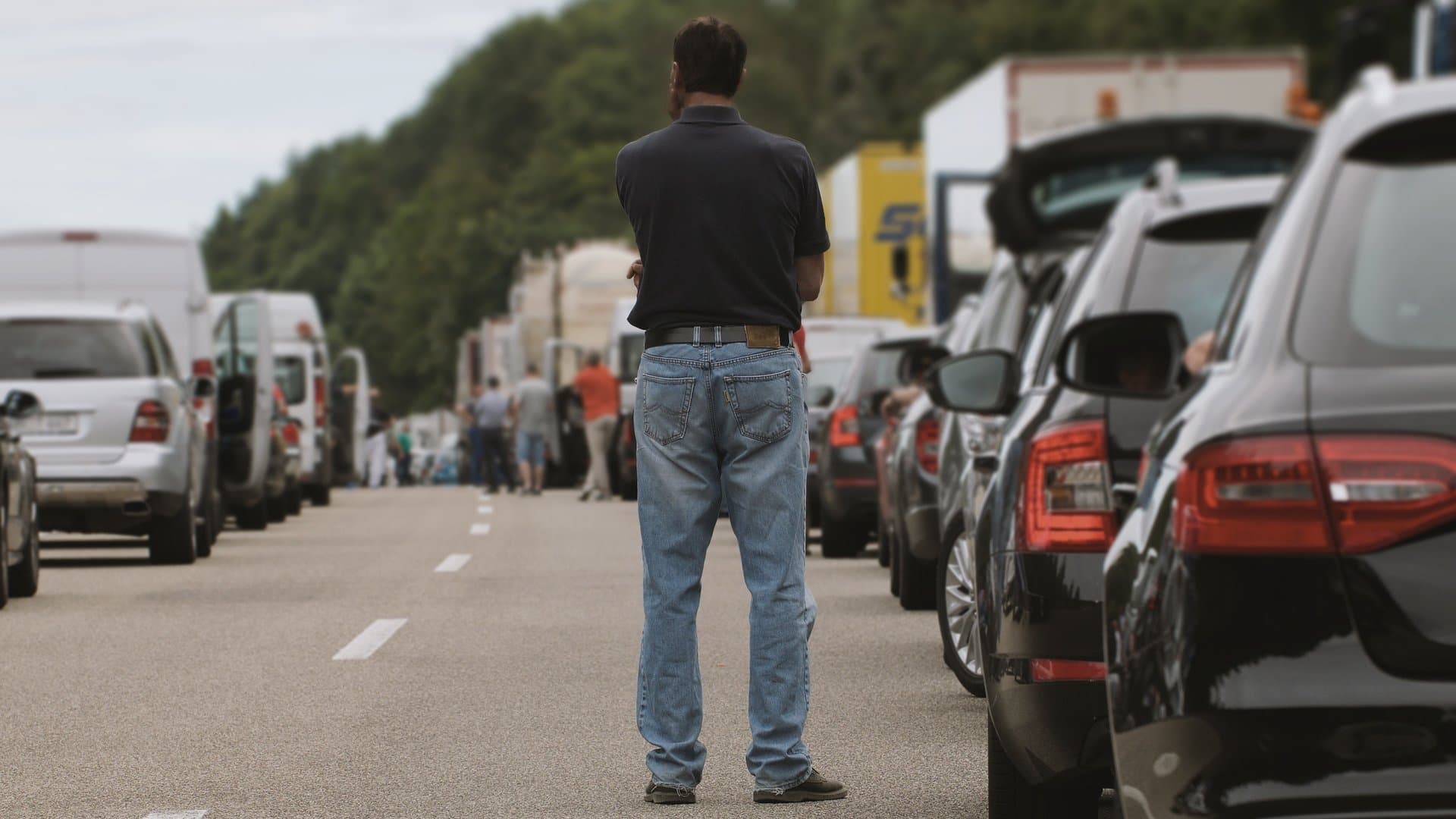
For many people, the summer vacation will begin with traffic jams again this year. In Hesse, Rhineland-Palatinate, and Saarland, the summer holidays start on Monday, June 29 - these three states are thus kicking off the 2026 summer holidays. An overview from ADAC shows where things will get congested this coming weekend.
Experience shows that people usually set off on the weekend before the holidays begin: For the days from Friday, June 26, to Sunday, June 28, ADAC expects the first major travel wave of the year and correspondingly full highways.
Traffic from abroad adds additional pressure: holidays are also beginning in some Swiss cantons, in Poland, and in Denmark, while they are already underway in Norway, Sweden, and Finland. This noticeably increases traffic volume on the main international routes.
When it will be especially crowded
Things will be particularly tight on the classic routes heading south as well as to the North and Baltic Seas. Vacation traffic starts as early as Friday afternoon, and on Saturday morning, excursion traffic to nearby recreational areas is added. The Alpine region, the low mountain ranges, the coasts, and the lake regions are especially affected. On Saturday and Sunday evenings, returning travelers will additionally cause full roads.
The situation is exacerbated by construction sites: there are currently around 1,000 construction sites on German highways, causing bottlenecks and longer travel times. A look back shows the scale of the travel season: in summer 2025, ADAC counted over 116,000 traffic jams with a total length of around 203,830 kilometers - equivalent to about five trips around the Earth.
These highways are particularly prone to congestion
ADAC names the following routes among others: the A1 (Fehmarn-Hamburg-Bremen-Dortmund-Cologne), the A3 (Oberhausen-Cologne-Frankfurt as well as Passau-Linz), the A5 (Kassel-Frankfurt-Karlsruhe-Basel), the A7 (Flensburg-Hamburg-Hanover-Kassel as well as Ulm-Füssen/Reutte), the A8 (Karlsruhe-Stuttgart-Munich-Salzburg), and the A9 (Berlin-Nuremberg-Munich). In addition, there are the A2, A6, A10, A24, A81, as well as the Alpine access roads A95 toward Garmisch-Partenkirchen, A96 toward Lindau, and the A99 highway ring around Munich.
Brenner route: The perpetual bottleneck Lueg Bridge
Those traveling toward Italy need to bring a lot of patience. In Austria, construction sites and holiday traffic on the West, Pyhrn, Tauern, Inntal, and Brenner highways lead to delays. The main reason is the renovation of the Lueg Bridge on the A13: the aging structure has been undergoing renovation since the end of March 2025, with work expected to continue until 2030. Since January 1, 2025, the bridge has only been passable in one lane; only on high-traffic days is a second lane temporarily opened through special traffic management. During the summer months from June to September, the route is operated with two lanes according to the ASFINAG traffic calendar on many high-traffic days - nevertheless, the risk of congestion remains high this coming holiday weekend.
Special caution is required at Fernpass in Tyrol: On Saturday, June 27, the B179 between Reutte and Nassereith will be completely closed from 10 a.m. to 12 p.m. ADAC advises making a wide detour around Fernpass on this day. Those who want to avoid the Brenner can consider the Reschen Pass or the Felbertauern Road, depending on their destination - however, there are partial restrictions for trailers and motorhomes there.
There are also traffic jams in Switzerland and Italy: the Gotthard route (A2), the A1 between Bern, Zurich, and St. Margrethen, as well as the A22 via the Brenner in Italy and the A9/A7 from the Swiss border via Milan to Genoa are congested. Important for spontaneous travelers: in Bavaria and Tyrol, exit restrictions apply on several routes when there are traffic jams to prevent diversion traffic through towns. And: when entering Germany, there may be additional waiting times due to border controls.
Money-saving tip: Fill up before June 30
At least there's good news for the travel budget: fuel prices have dropped significantly recently and are at their lowest level since early March. On Sunday, June 21, a liter of Super E10 cost an average of 1.822 euros nationwide, diesel 1.738 euros - with a continuing downward trend. But watch out: the fuel discount, which temporarily reduces the energy tax, expires on June 30, 2026. Without an extension, prices are likely to increase by up to around 17 cents per liter afterward, usually not suddenly but over the course of one to two weeks due to existing inventory. So those who need to fill up anyway should do so before the deadline. As for timing, the rule of thumb still applies: filling up is usually cheapest shortly before noon, after which prices increase noticeably.
Getting to your destination more relaxed
The most important tip remains timing: Friday afternoon and Saturday morning are the most critical time windows. Those who start early in the morning, at night, or not until Sunday will get there much more stress-free. Current traffic jam and travel time information is available on the road through the ADAC app, ASFINAG's online services for Austria, and traffic radio stations.