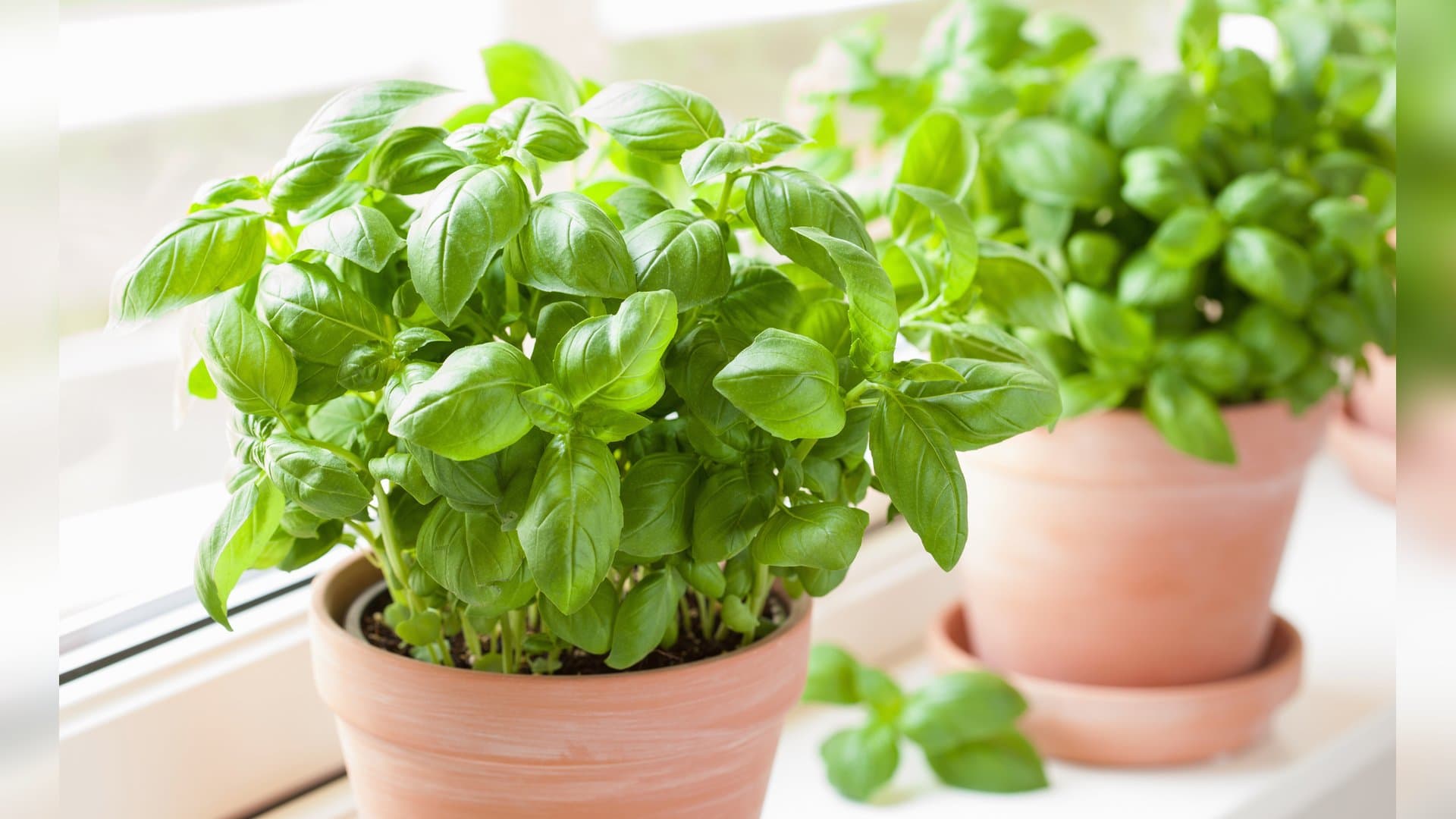
Basil is one of the most popular culinary herbs - and at the same time one of those that die the fastest. Barely bought, the plants first appear lush and fresh, but a few days later the leaves droop, turn black or fall off. The pattern is so widespread that it has less to do with a lacking green thumb than with unsuitable starting conditions.
Repot immediately after purchase
The most important reason: Most basil plants sold in supermarkets are not intended for long-term pot cultivation. In a small plastic pot, several densely sown plants often grow together. They compete for water, light and nutrients, which quickly weakens them.
Basil plants benefit from being repotted immediately after purchase. A significantly larger pot with a drainage hole is ideal so that excess water can drain off. Loose, nutrient-rich herb or vegetable soil that is not too compacted works well as substrate.
The plants can be carefully separated. A supermarket pot often contains 10-20 tightly packed seedlings. If they are gently pulled apart and distributed across several pots, they suddenly have enough space to develop stable roots. Care should be taken to damage the delicate roots as little as possible.
After repotting, it helps to water the plant once thoroughly but not excessively so that the soil settles. During the first few days, basil is best placed in a bright location but not in direct blazing sun to reduce transplant stress.
The right amount of water
Another central factor is watering behavior. Too little water quickly causes the leaves to become limp and the plant to dry out from the bottom. At the same time, waterlogging is one of the most common reasons for dying: If water permanently sits in the pot, the roots no longer get oxygen, begin to rot and the plant collapses within a few days.
Proper care lies in between: The soil should be consistently slightly moist but never wet or soggy. Practically, this means watering only when the top layer of soil has dried slightly. A simple test is the finger principle: If the soil feels dry in the top one to two centimeters, it's time to water.
The method of watering is also important: It's better to water infrequently but thoroughly, so that water can drain out at the bottom - and then consistently remove excess water from the saucer.
The ideal location
Basil loves light but reacts sensitively to extreme conditions. A bright location is ideal, but direct, intense midday sun behind glass should be avoided. Heat can build up significantly through window panes, leading to stress, wilting leaves and burned edges.
A spot with plenty of indirect light or gentle morning sun is optimal. At the same time, basil should not be placed in too dark a location, as otherwise growth will be weak and the plant unstable. Temperature fluctuations are also problematic. Drafts, cold windowsills or frequent relocation can additionally weaken the plant.
Harvest correctly for more growth
Many people pluck individual leaves, causing the plant to shoot up and quickly become bare. The result is a thin, unstable stem with little new leaf formation.
It's much better to regularly cut entire shoot tips - ideally just above a pair of leaves. This stimulates the plant to branch out. It grows bushier, more stable and produces significantly more leaves in the long term.
Regular harvesting is not a stress factor but a growth stimulus: The more consistently basil is cut back, the more vigorously it develops.