
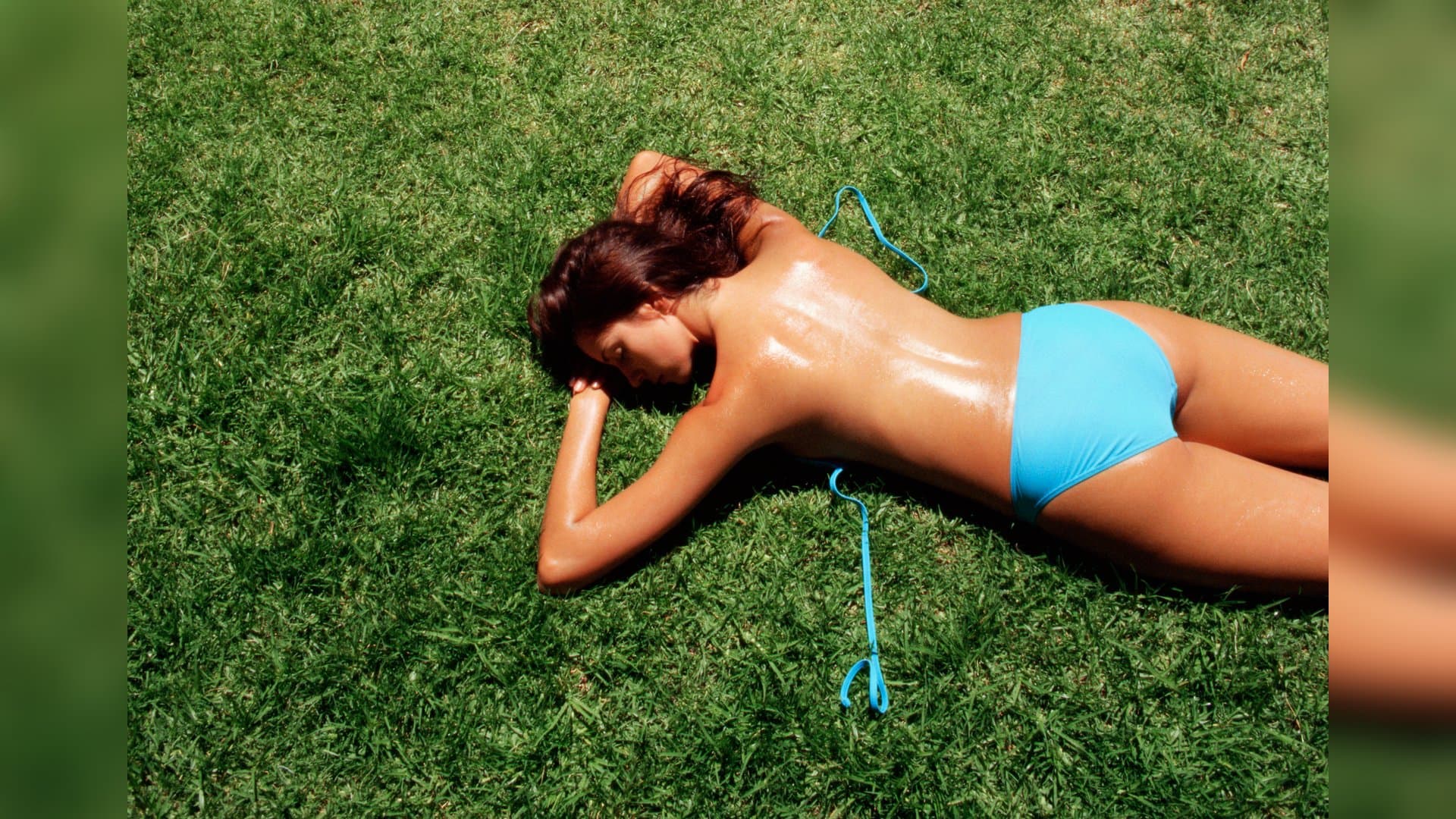
Lying in the sun for hours at the highest UV index, seizing every opportunity to tan, and presenting the results on social media: "Tanmaxxing" is the latest trend. Young people in particular are celebrating tanned skin as a beauty ideal again and proudly showing off their tan lines. For some, the skin can't get dark enough, which is what the name of the trend alludes to. They check the weather app to see when UV radiation is particularly strong, then head to the park, the beach, or the balcony. A visit to the tanning salon is also supposed to deliver the desired results.
"Tanmaxxing" is another of many terms circulating online in the context of self-optimization. "Looksmaxxing" became particularly well-known previously. Young men in particular try to improve their outward appearance to seem more attractive. In addition to fitness, skincare, and fashion, this sometimes includes methods that are harmful to health.
No type of tanning is healthy
Excessive and even light tanning is not healthy. Every type of tanning shows that the skin has already reacted to UV radiation. From a medical perspective, tanning is a protective mechanism of the body: UV radiation can damage the DNA in skin cells. The cells produce increased amounts of the pigment melanin. This is deposited in the upper layers of the skin and colors the skin darker. The melanin is supposed to protect the deeper skin cells from further UV radiation, but cannot reverse damage that has already occurred.
Repeated UV exposure increases the risk of premature skin aging, pigmentation disorders, and skin cancer. Natural and artificial UV radiation has been classified by the International Agency for Research on Cancer (IARC) as a Class 1 carcinogen. Overall, UV radiation is the biggest cause of skin cancer.
Sun protection is needed even under makeup
Sun protection is therefore essential and should be part of every beauty routine. The Federal Office for Radiation Protection (BfS) recommends avoiding strong UV radiation as much as possible and protecting the skin with clothing and sunscreen with at least SPF 30. In water, in the mountains, and in southern vacation destinations, SPF 50+ is a must. For the cream to provide protection, enough must be applied. According to the BfS, four heaping tablespoons is a sufficient amount for the entire body.
The face must also be protected with cream - even when makeup is applied. Sun protection always forms the bottom layer. Foundation or a tinted cream with sun protection factor does not replace sunscreen. To obtain adequate protection, a very thick layer would have to be applied.