
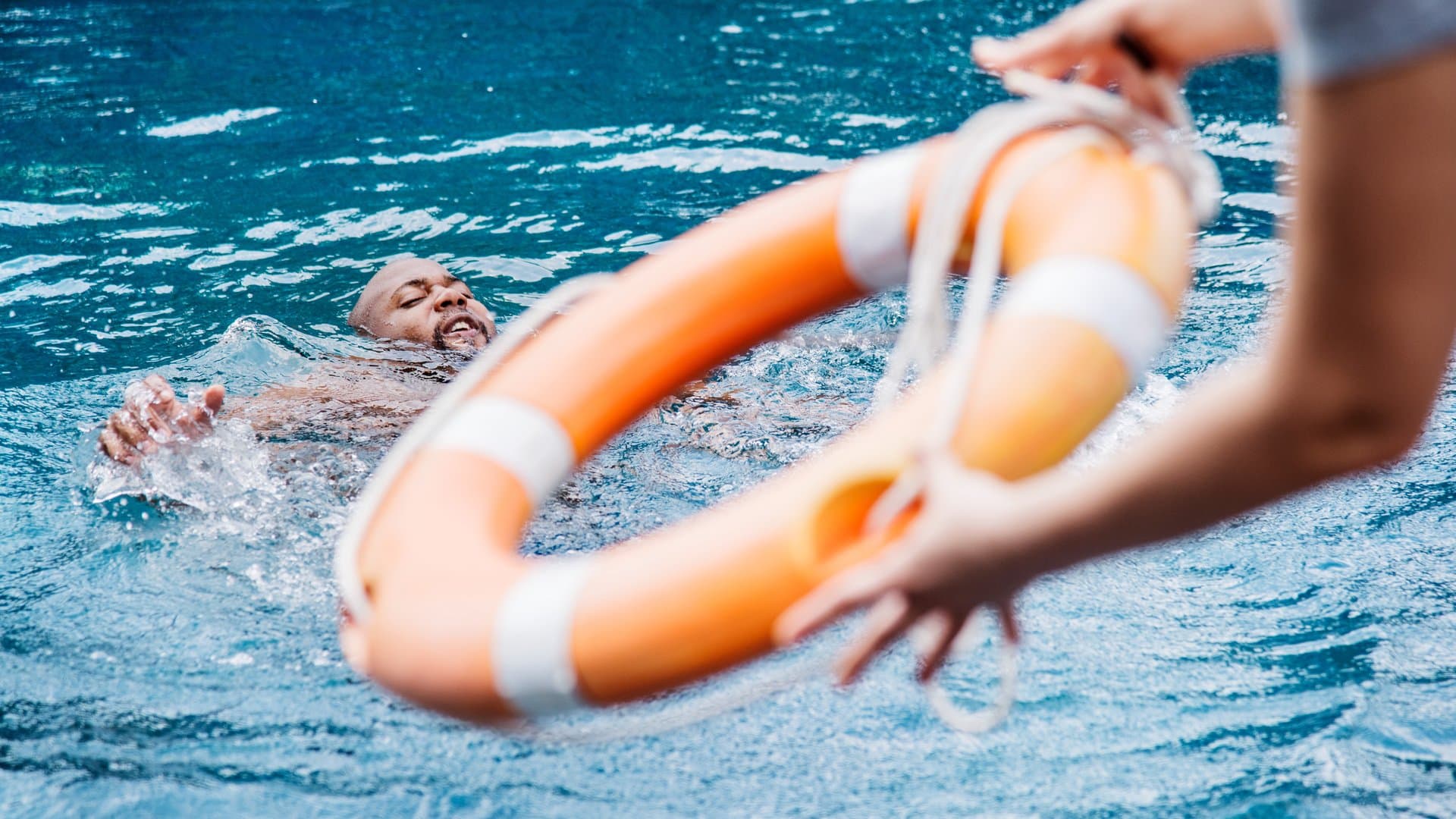
On hot summer days, there's hardly anything better than cooling off in a lake, outdoor pool, or ocean. But wherever people swim, dangers also lurk. According to the WHO, drowning is one of the most common accidental causes of death worldwide - and often happens differently than many people know it from movies. Those who know the warning signs and understand how to act correctly in an emergency can save lives.
Drowning often looks unspectacular
Most people imagine a drowning person screaming loudly and flailing wildly with their arms. In reality, drowning often occurs almost silently. Those affected struggle to keep their head above water and to get air. There's usually no strength left for calling out or waving.
The German Life Saving Association (DLRG) lists the following warning signs, among others: The person barely moves forward and seems to be drifting in place. The head is tilted far back and the mouth is just above the water surface. The eyes appear glassy or are closed, the arms press downward rather than forward, and the person doesn't respond to being addressed.
If you're unsure, it's better to ask one time too many or get help one time too many than one time too few.
Call for help first, then rescue
Anyone who observes a swimming accident should, according to DLRG recommendations, first alert other swimmers to the situation and call emergency services at 112.
It's also important not to put yourself in danger. The DLRG recommends throwing the affected person a life ring, flotation device, or another buoyant object if possible. If possible, you should also try to reach the person from shore with a pole, branch, or other long object. Only those who have sufficient rescue skills and can safely assess the situation should enter the water themselves.
People in acute danger of drowning often react in panic and may cling to rescuers. This creates the danger that the rescuer may also be pulled underwater. Therefore, water rescues should be carried out by trained rescue personnel whenever possible or - if possible - conducted from a safe distance.
After the rescue, every minute counts
Once the person is on land, consciousness and breathing should be checked immediately. If the person is breathing normally, they are placed in the recovery position and monitored until emergency services arrive.
If they are not breathing or not breathing normally, you should immediately begin cardiopulmonary resuscitation and continue it without interruption until professional help takes over. Even if those affected initially recover after the swimming accident, a medical examination is necessary. Water in the airways can lead to complications later.
Swimming accidents can often be prevented
According to the DLRG, many accidents could be prevented through simple precautionary measures. The DLRG recommends swimming only at supervised swimming areas whenever possible and never leaving children unsupervised near water. It's also important to realistically assess your own swimming abilities and to avoid alcohol before swimming, as it impairs reaction time and performance.
After prolonged sunbathing, the body should also gradually adjust to the cool water to avoid circulatory problems. Warning signs, currents, and weather conditions should always be observed. Anyone bathing in an unfamiliar body of water should not go into the water alone if possible.
The DLRG emphasizes that safe swimming is one of the most effective measures against swimming accidents. Therefore, it recommends familiarizing children with water early and regularly refreshing swimming skills. Adults can also benefit from a first aid or lifeguard training course.