
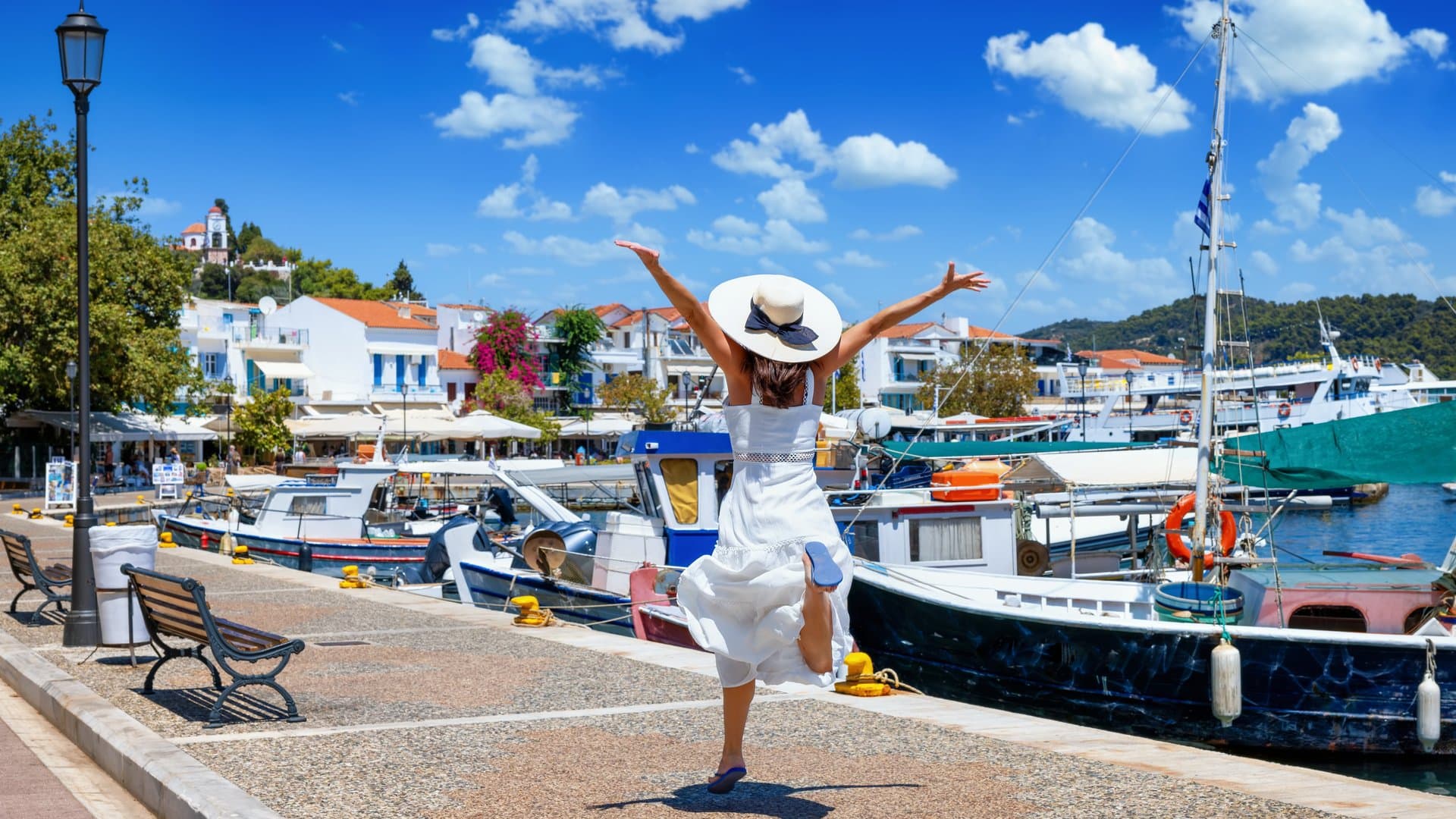
Dreamlike islands, good food, and whitewashed houses: Greece is one of Europe's most popular vacation destinations. But anyone planning a trip there for the first time quickly faces many questions. Which islands can be reached directly from Germany? How does island hopping actually work? When should you book the ferries? And how expensive is a week's vacation really? This guide explains the most important points travelers should know before their trip to Greece.
More Than Just Santorini and Mykonos
Greece consists of around 6,000 islands and islets, of which about 200 are permanently or seasonally inhabited. In addition, there's the mainland, historic cities, mountains, and one of the longest coastlines in Europe. This diversity makes the country attractive, but also confusing for travel planning.
Many people first think of well-known islands like Crete, Santorini, or Mykonos when it comes to Greece. In fact, the best travel experience depends heavily on what kind of vacation you're looking for: lively, quiet, nature-oriented, or culturally focused. That's exactly why it's worth considering in advance whether a single island is enough or whether a combination of islands and mainland is a better fit.
Getting There: Direct to the Island or via Athens?
Greece can be traveled in two ways: traditionally via Athens or directly to an island. The latter is often the easier option in many cases.
Especially during the summer months, there are numerous direct flights from Germany to Crete, Rhodes, Kos, Corfu, and seasonally also to Santorini or Mykonos. Those visiting only one island often save several hours of travel time this way.
Athens, on the other hand, makes sense primarily when combining multiple islands or planning a round trip on the mainland.
Island Hopping: How the System Really Works
The backbone of traveling in Greece is the ferry network. It connects the islands with each other and with the mainland. The most important hub is the port of Piraeus near Athens, from which many connections to the Aegean depart.
The Cyclades islands are particularly well connected. Those landing on Santorini, for example, can relatively easily continue to Naxos, Paros, or Mykonos. The Dodecanese island group or the Ionian Islands are also accessible through regular ferry connections.
Travel times vary greatly: some routes take only two to three hours, others almost a full day. Fast ferries shorten travel time but are more expensive and less pleasant in strong winds.
An important rule of thumb: two islands in one week is often ideal. More often feels stressful because a large portion of time is lost to transfers.
Booking Ferries: When and How to Plan
In the off-season, many ferries can be booked spontaneously on-site. During the high season between June and September, it's different: popular connections are often fully booked weeks in advance. Those traveling in summer should therefore reserve early, especially for routes between heavily frequented islands. Spontaneity is possible, but risky.
Booking is now mostly done online through platforms like Ferryhopper or Direct Ferries. There you can compare and directly book routes, times, and operators. Alternatively, you can also buy tickets directly from the shipping companies.
Most tickets are digital and are shown via QR code on the smartphone. Nevertheless, you should be at the port early, as boarding often begins 30 to 60 minutes before departure and the processes are quick.
Getting Around on the Islands
Mobility on the islands depends heavily on the respective size of the island. On smaller islands, buses, scooters, or quads are the most common options. They enable flexible excursions to remote beaches and villages.
On larger islands like Crete or Rhodes, a rental car is usually the better choice. Many of the most beautiful places are off the main roads, and distances are often underestimated. During high season, vehicles should definitely be booked in advance, as demand is often very high.
Costs: What a Week in Greece Really Costs
Greece is generally considered a moderately priced travel destination overall. However, this can vary greatly depending on the island. Mykonos and Santorini in particular are significantly above average in terms of price, while less well-known islands are often cheaper.
For one week including flight, accommodation, meals, and transportation, travelers should roughly budget between 800 and 1,500 euros per person. Comfort or luxury trips are significantly higher in price. The biggest cost factors are accommodations during high season, ferries between islands, and rental cars.
Money, Cards, and Practical Organization
The euro is the national currency, and card payment is common in most tourist regions. Nevertheless, cash remains important, as smaller taverns, kiosks, or remote places don't always accept cards.
ATMs are available on all larger islands, but they can be heavily frequented in summer and therefore not always well stocked. A combination of card and cash is therefore probably the safest solution.
Daily Life in Greece: Slower, Later, More Social
The daily rhythm differs significantly from Central Europe. Lunch and dinner often take place later, and especially in summer, life really begins only after sunset.
Taverns often don't fill up until around 9 p.m. or later. Eating is less about quick sustenance and more of a social event that can stretch over hours.
Tap Water, Food, and Tipping
Tap water is basically drinkable in many regions, but is often avoided on islands or has an unusual taste. Many travelers therefore resort to bottled water.
Greek cuisine is significantly more diverse than classics like gyros, souvlaki, or moussaka initially suggest. It's also well-suited for vegetarian diets: vegetables, legumes, olive oil, and cheese play a central role.
Tipping is not mandatory, but customary. In restaurants, usually five to ten percent is given or the amount is simply rounded up.
Best Time to Travel to Greece
The most pleasant travel months are May, June, and September. During this time, the weather is warm but not extremely hot, and many places are less crowded.
July and August are considered high season with very high temperatures, crowded beaches, and higher prices. Those who are flexible are better off traveling outside these months.