
The major summer 2026 travel wave is gaining momentum. In some federal states, vacations have already begun a few days ago. Hesse, Rhineland-Palatinate, and Saarland kicked things off on June 29, followed shortly after by Bremen and Lower Saxony on July 2. This Saturday, July 4, four more states are following suit: In Saxony, Saxony-Anhalt, Schleswig-Holstein, and Thuringia, the serious business of life is taking a pause. For travelers, this means particularly heavy crowds can be expected on the roads, at train stations, and at airports.
Staggered Vacation Start
To prevent everyone from departing at the same time and to ensure sufficient accommodations are available, summer vacations in Germany are staggered. Berlin, Brandenburg, and Hamburg follow on July 9, along with Mecklenburg-Western Pomerania on July 13. North Rhine-Westphalia begins summer vacation on July 20, before Baden-Württemberg on July 30 and Bavaria on August 3 follow as the last states, as usual. This staggered approach is intended to prevent vacation destinations and roads from filling up everywhere at the same time. Nevertheless, travelers must prepare for heavy traffic.
Highways: These Days Pose the Greatest Traffic Jam Risk
For road travel, the ADAC has identified the critical dates. Already yesterday, Friday, July 3, and today, Saturday, July 4, increased traffic volume can be expected on highways in eastern Germany due to the start of vacations.
Another critical date is the vacation start in North Rhine-Westphalia: While vacations officially don't begin there until July 20, experience shows that the travel wave typically starts rolling on Friday afternoon - in this case, on July 17. It is expected that traffic disruptions may occur particularly heading south, in metropolitan areas, and toward the Netherlands.
The first weekend in August, when people from Baden-Württemberg and Bavaria have their turn, is also considered particularly prone to traffic jams. Already in 2025, this weekend was among the most congested of the year, the automobile club reports. Generally, Fridays in August are typically considered particularly prone to traffic jams.
A look back by the organization shows just how heavy the burden can become in summer: During the 2025 summer vacation period, ADAC counted more than 116,000 traffic jams on German highways with a total length of almost 204,000 kilometers. According to their data, the combined waiting time amounted to approximately 13.5 years.
Airports: Millions of Travelers and a New Control System
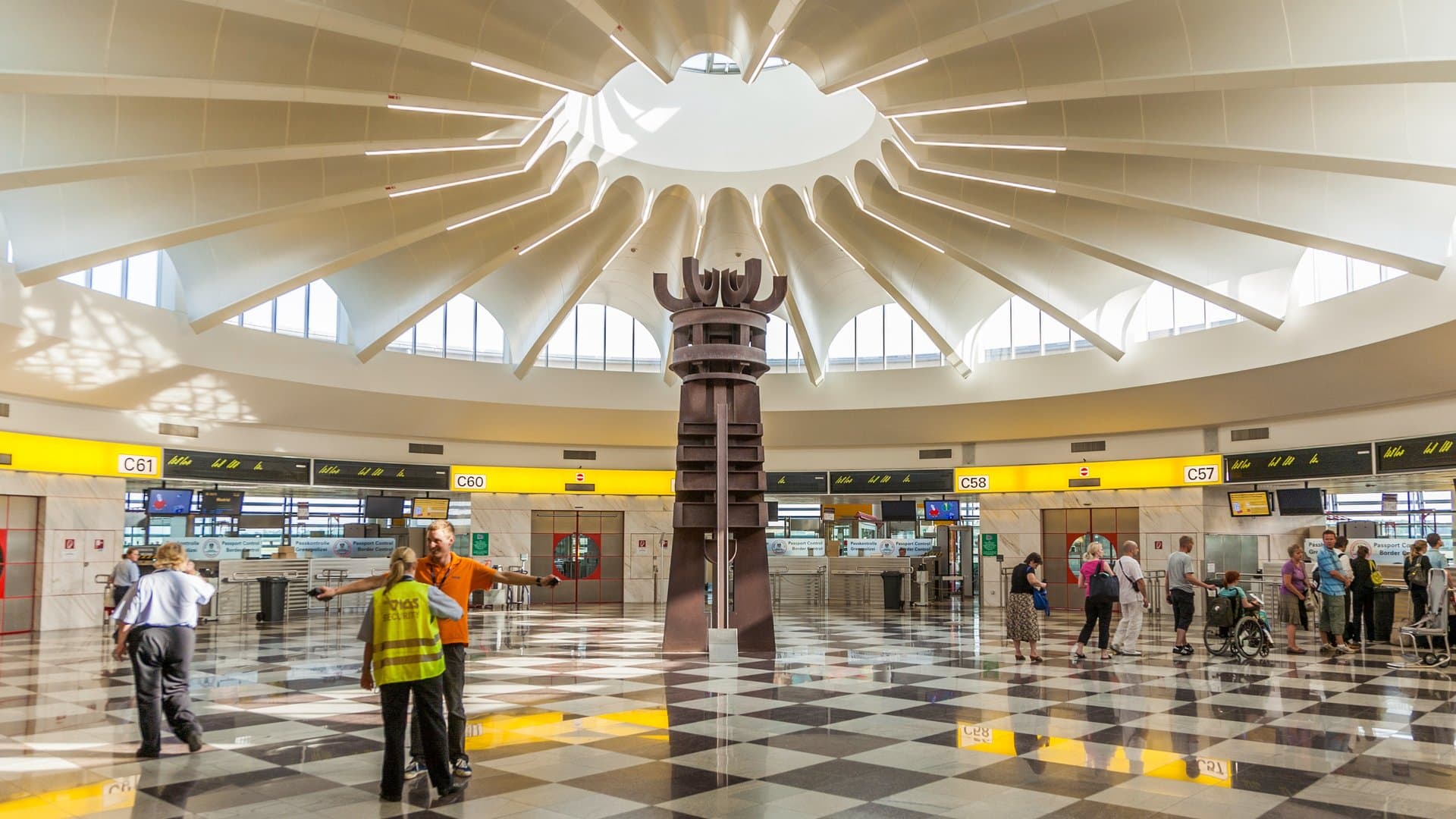
Airports will also be crowded. Frankfurt Airport operator Fraport alone expects about nine million travelers and around 60,000 flight movements between June 26 and August 9, according to a statement. Already during the first vacation weekend at the end of June, the operator expected a good 616,000 passengers at Frankfurt Airport.
Lufthansa expected over 950 departures and about 158,000 passengers in Frankfurt for the same weekend. At the German airline, southern European destinations are particularly popular this summer - including Portugal, Spain, and Italy. In addition, the north with Denmark, Sweden, Norway, Finland, and Iceland is also trending. Generally, the airline recommends: It's better to plan with a time buffer. Lufthansa asks all guests to allow sufficient time for check-in, security screening, and boarding.
New this summer is the European Entry/Exit System EES, which launched in October 2025 and is intended for travelers from non-EU countries. Fraport pointed out that this, combined with generally increased travel volumes, could lead to longer waiting times at border controls. Therefore, travelers from non-EU countries as well as EU travelers with destinations outside the Schengen area were recommended to be at the terminal at least three hours before departure. For flights within the Schengen area, about two and a half hours were recommended, and even with only carry-on luggage, still about two hours.
Rail: Delays and Waiting Times?
Demand on the rails remains high according to Deutsche Bahn. Already in September 2025, long-distance passenger transport board member Michael Peterson was quoted in a statement as saying: We are strategically expanding our timetable with a view to demand and capacity on the rail network. At that time, it was announced that the network in which ICE trains run approximately every half hour would more than double in 2026 from about 900 kilometers to over 2,300 kilometers.
At the same time, as is practically always the case in Germany, there are numerous construction projects on different routes that slow down train traffic. An overview of current construction sites can be found on the Bahn website. For example, there are station cancellations or detours, and unfortunately delays can also be expected with the railroad.
Generally, travelers should bring patience. DB doesn't necessarily enjoy the best reputation when it comes to punctuality. Just in June, a nationwide major disruption occurred that brought train traffic to a standstill across the country. Due to a malfunction of the digital railway radio system GSM-R, according to Deutsche Bahn, all trains were temporarily held at stations. The problem occurred late in the evening and the company announced it was issuing taxi and hotel vouchers to travelers and providing accommodation trains where possible in each case. Fortunately, the disruption was soon resolved.
How to Reduce Travel Stress
Those who are flexible can best avoid the biggest crowds. ADAC recommends not departing for summer vacation on Friday afternoons or on weekends if possible, and not during rush hour. At the airport, online check-in, early arrival, and pre-booked parking spaces can ensure a more relaxed start to your vacation. Those traveling by train may need a bit of luck. In long-distance travel, seats can at least usually be reserved.