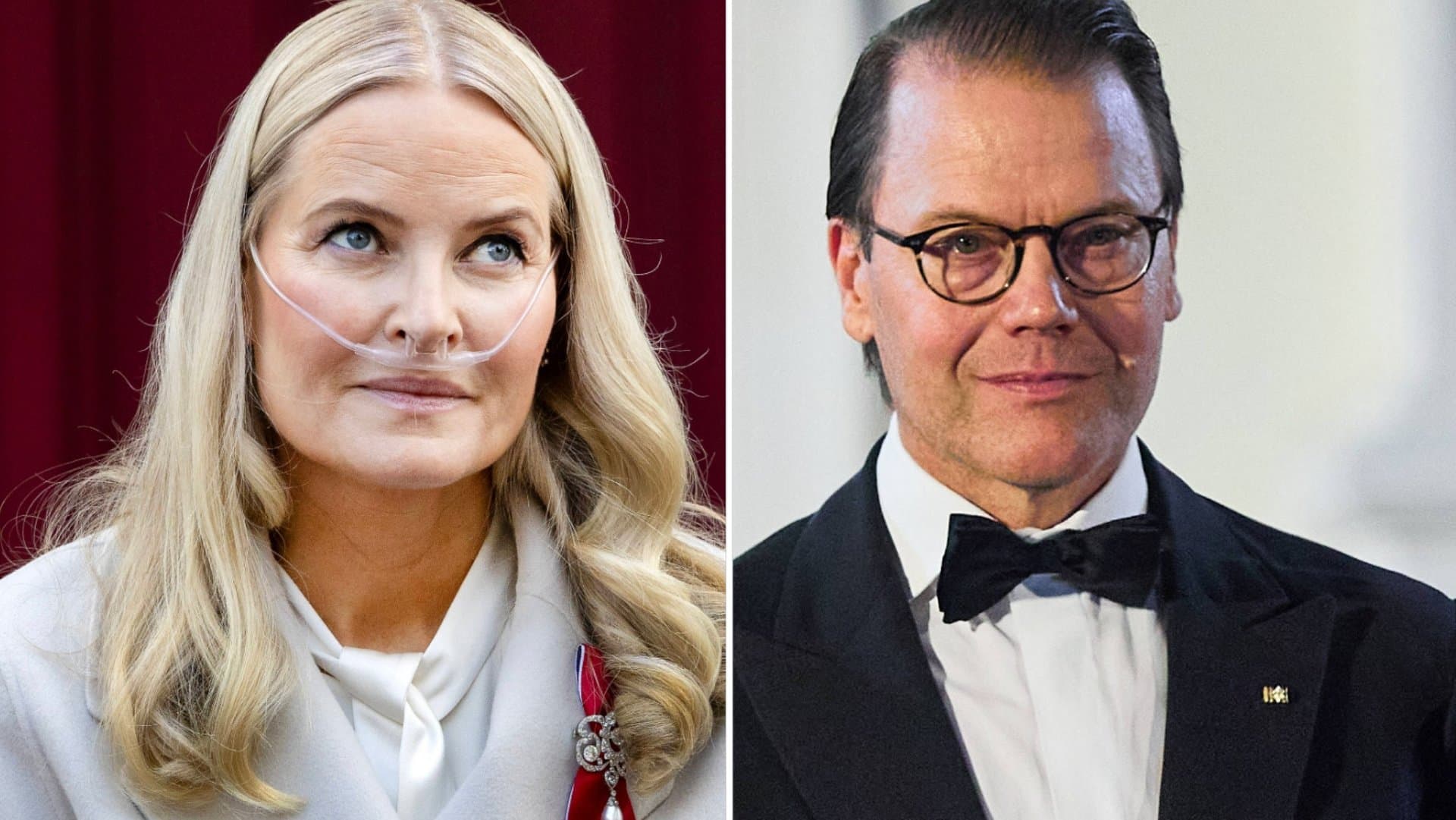
The recent lung transplant of Norway's Crown Princess Mette-Marit (52) has caused quite a stir. Many royal observers remember in this context: Prince Daniel of Sweden (52) has also been living with a donor organ since 2009. On May 27, the husband of Crown Princess Victoria (48) underwent a roughly six-hour kidney transplant at the Karolinska University Hospital in Stockholm. The new kidney came from his own father, Olle Westling.
Prince Daniel's Case Hardly Comparable to Mette-Marit
The Norwegian Royal House only confirmed the transplant on Wednesday morning. "The Crown Princess has undergone a successful lung transplant at Rikshospitalet in Oslo", according to a statement. The procedure has "been successful so far".
Like all other patients after a transplant, the Crown Princess will remain at Rikshospitalet for several more weeks, the statement continued. This is a routine measure to adjust medication, treat any complications, and carry out rehabilitation measures, explained Are Holm, head of the relevant department at Rikshospitalet, in the statement.
The cases of Prince Daniel of Sweden and Crown Princess Mette-Marit are hardly comparable. Since his kidney transplant in 2009, Prince Daniel has been working full-time again. In contrast, no one can currently say exactly what the Norwegian's daily life will look like in the long term.
A Well-Kept Secret for Years
Daniel's illness was not publicly known for a long time. The Prince suffered from a congenital disease caused by a kidney defect. When Victoria and Daniel Westling announced their engagement on February 24, 2009, he was already ill - which the public did not see at the time. Many royal fans were later shocked that the young Prince had been seriously ill.
Only years later did Daniel himself speak about his illness. In an interview published in 2019 with Swedish broadcaster SVT, he described how his condition had deteriorated acutely and the planned kidney transplant therefore had to be moved up in great haste.
"A Completely New Life"
The Prince later described the procedure and its consequences in clear terms. "Before I received a new kidney, I went through a short but intense phase of illness. I got a completely new life when I received the kidney from Dad", Daniel explained in 2017 to several Swedish media outlets, including "Aftonbladet".
He also told the magazine "Svensk Damtidning" that he still constantly thinks about the kidney operation - and is forever grateful to his father for donating one kidney, reported the Norwegian portal "Dagbladet".
Comparison with Mette-Marit Only Partially Possible
Despite the parallel - two royal spouses living with a donor organ - the two cases cannot be easily compared with each other, as already mentioned at the outset. Daniel received a kidney from a living donor, his father. In Mette-Marit's case, however, it is a lung transplant. After the transplant, Prince Daniel's rehabilitation was comparatively uncomplicated. Daniel resumed his public duties after the operation. Since then, he has regularly appeared at official events.
However, like all organ recipients, he must permanently take immunosuppressive medication to prevent rejection. Kidney transplants are among the most successful transplants in organ medicine. With stable medication management, the life expectancy of patients often approaches that of the general population.
Lung transplants, on the other hand, are medically much more complex. They are associated with higher rejection rates, more frequent infections, and an overall lower median survival time, although results have improved in recent years, according to major health organizations such as NHS and Mayo Clinic.