
The price difference often jumps out immediately: A flight with a layover can easily cost a hundred euros less than the direct connection. On the screen, the calculation seems clear-cut. But the cheaper fare brings risks that are easily overlooked when booking - and can become expensive on travel day. When is the extra cost for a direct flight really worth it?
Booking portals like to suggest connections with very short layover times because on paper they get you to your destination faster. Forty-five minutes between landing and departure sounds doable - and at major hubs like Frankfurt, Munich, or Amsterdam, airports even allow such tight layovers as the official minimum connection time. In practice, however, the calculation often doesn't work out: Anyone who has to go through passport control, change terminals, or already lands with a delay suddenly finds themselves facing a closed gate.
As a rule of thumb, at least 60 minutes should be allowed for intra-European connections, and 90 to 120 minutes for intercontinental connections and terminal changes. It's also important to ask whether both flights are booked on one ticket: Only then will the airline handle rebooking if you miss a connection. Two separately booked budget tickets, on the other hand, are legally considered individually - in an emergency, the traveler is stuck with the costs, as the consumer protection agency also points out.
When Your Luggage Doesn't Make It
The same principle applies to luggage. If the trip is booked through, the suitcase is usually checked through to the destination airport and doesn't need to be transferred manually. Nevertheless, with each layover the probability increases that the luggage won't make the connection, especially with tight time windows. A piece of luggage left behind means waiting time at the service counter, filling out loss reports, and in the worst case, waiting for days at your vacation destination. Those traveling with carry-on luggage only elegantly avoid the problem. For everyone else, the direct flight is the only option where suitcase and passenger take the same plane.
With Children, Every Hour Counts
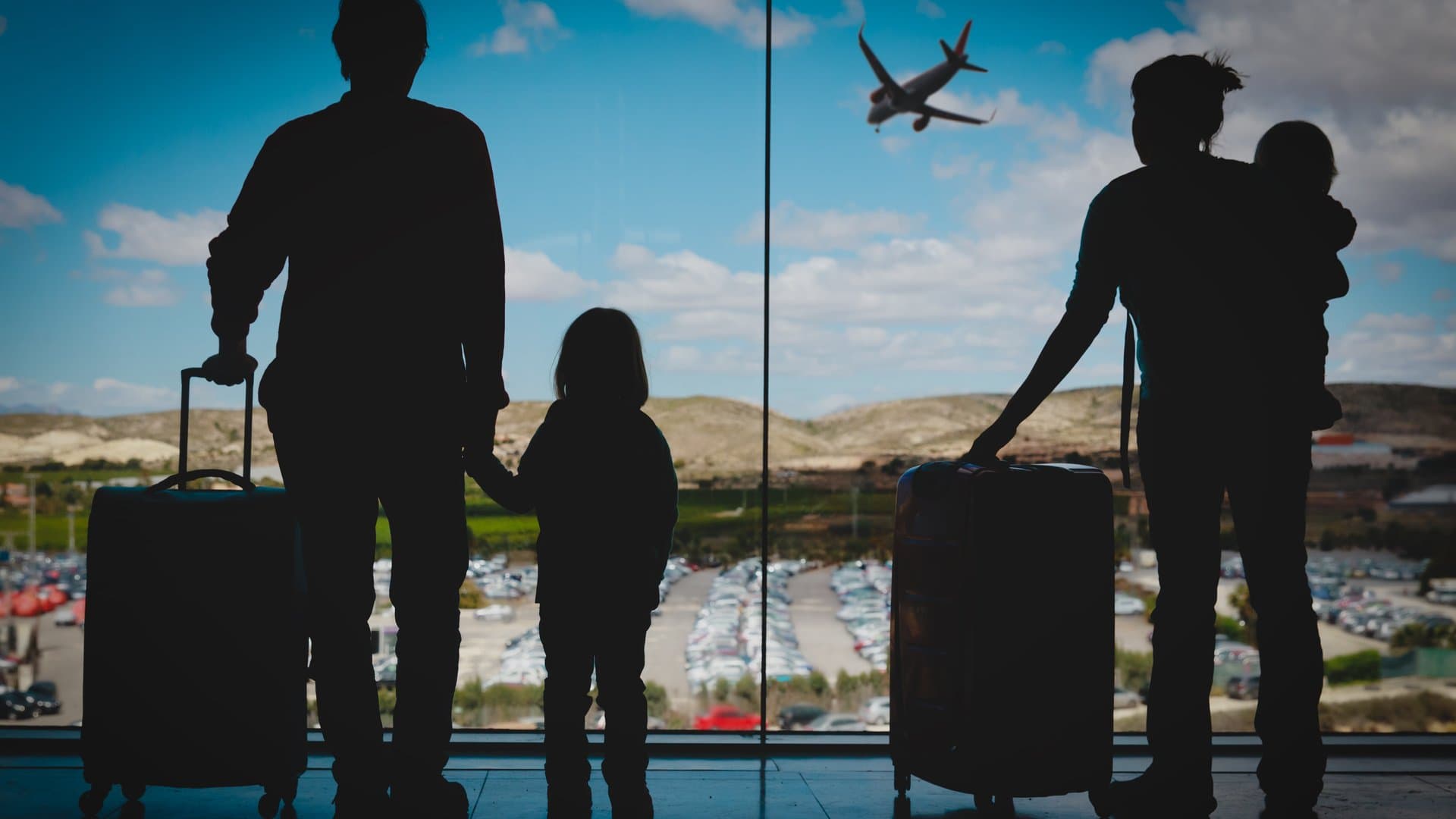
Families feel the disadvantages of layovers most acutely. What is an annoying wait for adults quickly becomes an endurance test with tired children. The second takeoff and landing cycle means renewed pressure on the ears, standing in line at the gate frays nerves, and total travel time often extends by several hours. Toddlers lose their rhythm, and what was planned as a relaxing start to vacation ends in tears and exhaustion. Here the extra cost for a direct flight often pays for itself through saved nerves alone, not to mention the shorter travel time.
What a Direct Flight Really Costs
The additional cost becomes relative when you factor in all considerations. In addition to the pure ticket difference, there are possible food costs during long layovers, the risk of a missed connection including hotel overnight stay, and the value of your own time. A layover that extends the journey by four hours eats up a noticeable portion of a weekend trip. Those staying two weeks, on the other hand, can more easily accept the extra hours. Time of day also plays a role: A late connection with the risk of arriving after midnight in case of delay weighs more heavily than an early morning layover with plenty of buffer.
When Layovers Are Still Worth It
Advising against connections with layovers across the board would be wrong. For some destinations there simply is no direct flight, and those who are flexible save real money with a well-planned layover. What matters are comfortable connection times, a single ticket, and a realistic assessment of your own travel party. Anyone traveling alone and with carry-on luggage only can confidently choose the cheaper option. But as soon as tight time windows, checked luggage, and children come together, the direct flight is worth its extra cost in most cases - not just financially, but especially for your nerves.