
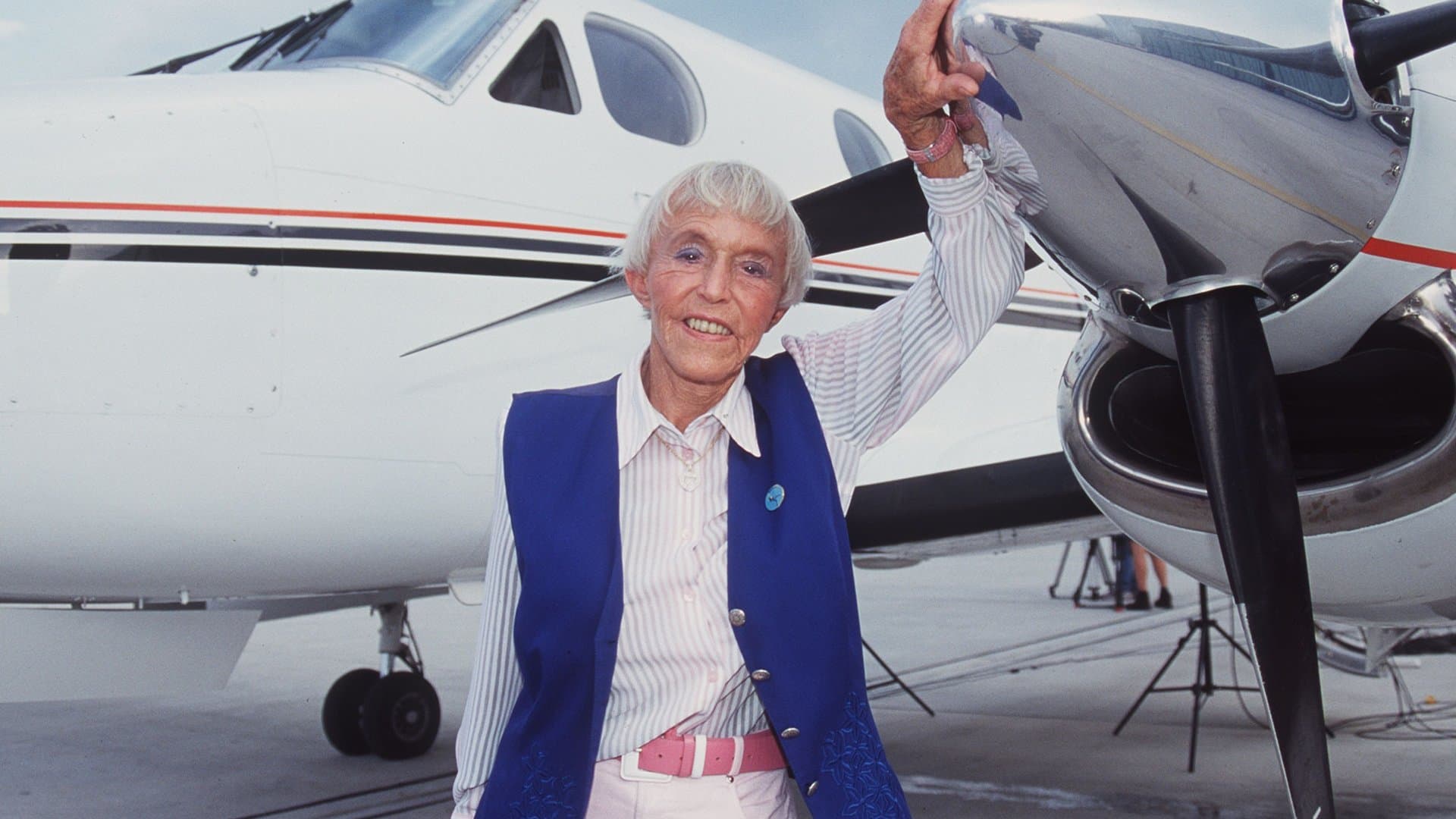
When people think of Beate Uhse, they usually picture the astute businesswoman who built an adult entertainment empire. But long before her name became synonymous with intimate education, she made headlines in a completely different field: as a pilot.
Uhse was educated early on by her mother, one of Germany's first female physicians. Her open-minded parents also supported her greatest dream: flying. At least after Uhse completed domestic science training. For her 18th birthday, Beate Köstlin received her pilot's license as the only woman among approximately 60 flight students.
In the 1930s, she worked as an aerobatic pilot and stunt pilot for UFA. In 1939, the then 19-year-old married her former flight instructor, fighter pilot Hans-Jürgen Uhse. Four years later, their son Klaus was born. Shortly thereafter, her husband was killed in the war. Until the end of the war, Beate Uhse served as a Luftwaffe pilot, transferring fighter planes from Berlin-Tempelhof to various deployment locations. She rarely spoke about her role during the National Socialist era, which repeatedly brought her criticism.
Courage Born of Necessity: the "Pamphlet X"
In 1945, the young widow fled with her small son and an aircraft to Schleswig-Holstein. After the war ended, she spent six weeks in British captivity. Because Germans were now forbidden from flying, she initially earned her living with jobs such as teacher and saleswoman. In doing so, she encountered many women who desired more intimacy but feared unwanted pregnancy during these difficult times.
Contraceptives were largely frowned upon at the time, and education about intimacy was taboo. In 1947, Uhse therefore published the so-called "Pamphlet X", a brochure in which she explained the contraceptive method based on the menstrual cycle calendar. She sold more than 30,000 copies of it.
Also in 1947, she met the Flensburg merchant Ernst-Walter "Ewe" Rotermund, whom she married two years later. Together they lived in Flensburg with his two children Dirk and Bärbel as well as their shared son Ulrich.
The "Specialty Store for Marital Hygiene"
With the brochure, Uhse had discovered a market gap. She initially built a mail-order business for contraceptives and educational books. In 1962, she finally opened the world's first adult store in Flensburg. Because the term "intimate relations" was considered offensive in conservative postwar economic miracle Germany, she called the store "Specialty Store for Marital Hygiene". She also chose the opening date carefully: a few days before Christmas. "People are all in a Christmas spirit then", she later explained.
But success also brought resistance. Over decades, Uhse had to defend herself against more than 2,000 charges and numerous court proceedings for alleged "indecency". She repeatedly went to court and, through her legal battles, contributed to the gradual liberalization of attitudes toward intimacy in Germany.
Not a Feminist, but a Pioneer
Toward the end of her life, the initial rejection increasingly gave way to recognition. Although she made access to contraception and personal autonomy easier for many women, her role within the women's movement is controversial. She faced sharp criticism at the latest when her company entered the adult film business. The women's magazine Emma wrote in a portrait: "She fights side by side with her comrades. In the National Socialist war as in the intimate relations war. Yesterday with bombs. Today with adult films."
Nevertheless: In a time when women were often confined to traditional roles, she carved her own path as a pilot, entrepreneur, and sole breadwinner. She acted as if there were no limitations for her based on her gender-and precisely through this became a pioneer of self-determined life for many women. When Beate Uhse died on July 16, 2001, at the age of 81, she left behind a society that dealt with intimacy much more openly than at the beginning of her career.
A Celebration as Farewell
She also had clear ideas about her farewell. In her estate, she stipulated that there should not be a traditional funeral service, but rather "a cheerful celebration with my favorite pieces of country and western music". Beate Uhse AG fulfilled this wish after her death: On August 3, 2001, a public memorial service took place at the Deutsches Haus in Flensburg, the cradle of her company, which in keeping with her wishes resembled a folk festival more than a quiet farewell.