
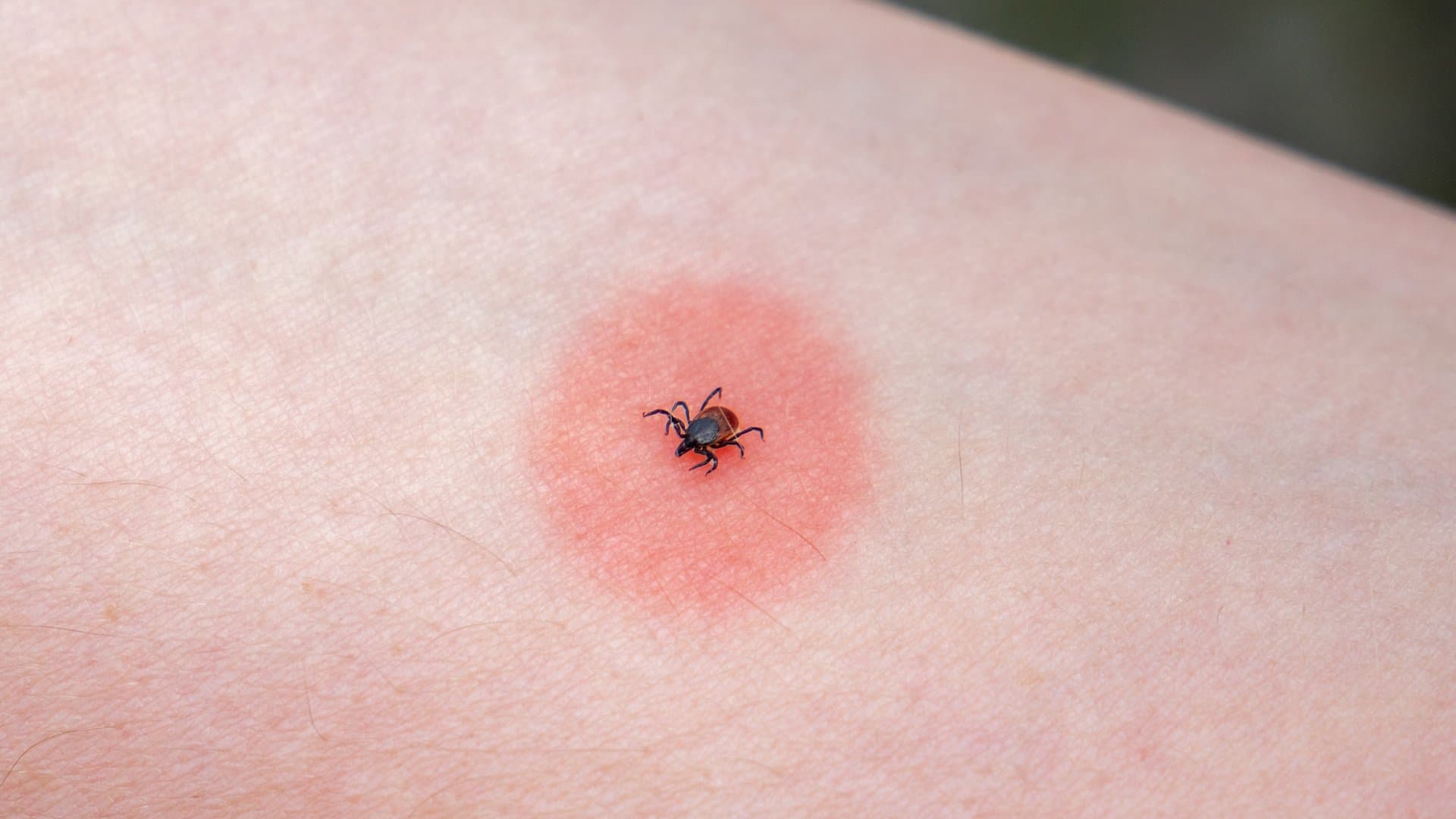
With warm temperatures, many people are drawn to parks, forests, and tall meadows. But ticks are also in high season there. The tiny bloodsuckers can transmit pathogens such as Borrelia bacteria or the TBE virus. A tick bite doesn't automatically mean an infection - but it's still important to act correctly.
Remove Tick as Quickly as Possible
Anyone who discovers a tick should remove it as soon as possible. The longer the creature remains in the skin, the higher the risk of bacterial transmission, according to the Robert Koch Institute (RKI), particularly for Lyme disease. Fine tweezers, a tick card, or a special tick remover are best suited for this.
The tick should be grasped as close to the skin as possible and pulled out slowly and straight. It doesn't matter whether you twist slightly or not - what's important above all is not to squeeze the creature.
Experts advise against home remedies such as oil, nail polish, glue, or alcohol. These can cause the tick to become stressed and potentially release more pathogens.
Disinfect and Monitor the Bite Site
After removal, the bite site should be disinfected and monitored over the coming weeks. A slight redness directly after the bite is usually harmless and disappears after a short time. It's different if a ring-shaped, spreading redness develops days or weeks later: the so-called erythema migrans. This is considered a typical sign of Lyme disease and should be examined by a doctor.
Not Every Tick Is Infected
Not every tick carries pathogens. Even if an infected tick has bitten, it doesn't necessarily lead to illness. In Germany, two diseases are particularly relevant: Lyme disease is transmitted by bacteria and occurs nationwide. There is currently no protective vaccination. If the disease is detected early, it can usually be treated well with antibiotics.
Possible symptoms include erythema migrans, flu-like symptoms, fever, as well as muscle and joint pain. If left untreated, Lyme disease can affect joints, nerves, or the heart, among other things.
Tick-borne encephalitis (TBE) is caused by viruses and occurs primarily in designated risk areas. These include large parts of Bavaria and Baden-Württemberg as well as individual regions in Hesse, Thuringia, Saxony, Brandenburg, and other federal states.
TBE can cause inflammation of the brain or meninges. There is no causal treatment for the disease - however, there is an effective protective vaccination, which is especially recommended for people who live in risk areas or frequently spend time outdoors there.
When Should You See a Doctor?
Medical advice is advisable if a ring-shaped erythema migrans develops after the tick bite, or if fever or flu-like symptoms occur. Even with severe headaches, neck stiffness, or neurological symptoms, it's worth visiting a doctor.
If the tick could not be completely removed or if there is uncertainty, especially after a bite in a TBE risk area, you should also play it safe and consult a doctor.
How to Protect Yourself from Ticks
Complete protection is hardly possible, but the risk can be significantly reduced. Wear long pants and closed shoes when in tall grass or forest, tuck pant legs into socks if possible, and use tick-repellent products (repellents).
After spending time outdoors, thoroughly check the entire body - especially the backs of knees, groin, armpits, abdomen, neck, and hairline. Children and pets should also be checked after spending time outdoors. The earlier a tick is discovered and removed, the lower the risk of Lyme disease transmission in particular.