
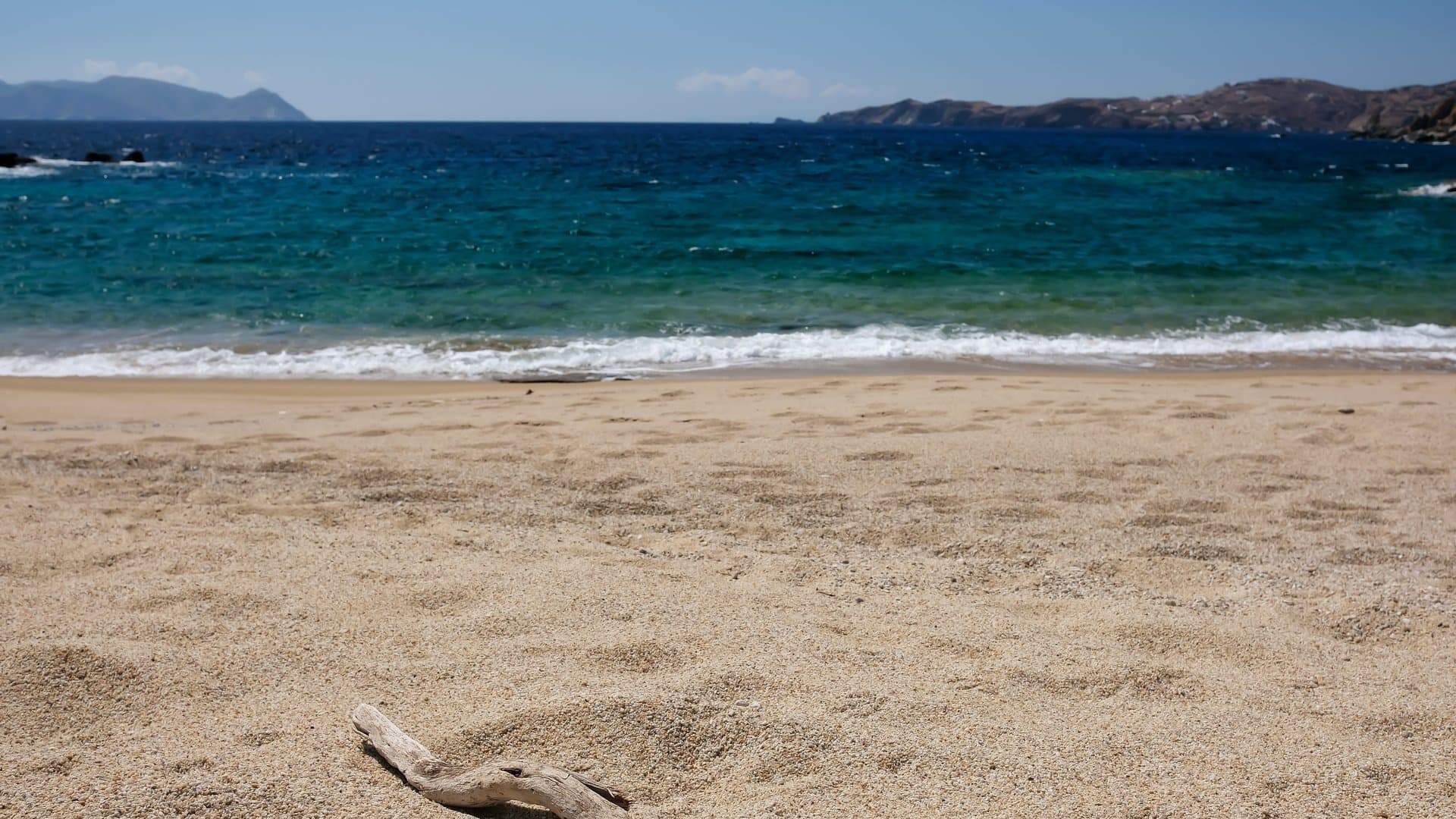
More than 40 kilograms of sand, pebbles and shells, hidden under car seats: At the end of May, Italian customs stopped a French woman at the Sardinian port of Porto Torres who wanted to board the ferry to Toulon. Under Regional Law No. 16 of 2017, which prohibits the removal of sand, she faces a fine of 500 to 3,000 euros. In general, many countries and numerous individual coastal communities in Europe have tightened their beach rules in recent years.
Sardinia: Sand, Umbrellas, Quotas
At the northwestern Sardinian beach La Pelosa, towels have been allowed only on a mat for years to prevent sand from being taken away. Access is limited to 1,500 people daily from May 15 to October 15, and admission costs 3.50 euros. Checks are conducted via QR code from 8 a.m. to 6 p.m. 500 spots can be booked at any time, while 1,000 are released only two days in advance. Children under twelve do not need a reservation.
Punta Molentis near Villasimius is particularly controversial. After a fire in July 2025, the mayor issued an ordinance that applies annually from June 6 to October 31: Access costs ten euros, must be booked in advance, and is limited to 90 vehicles per day and 190 people present simultaneously.
Italy: Where Beach Days Must Be Booked
Not all quota beaches charge admission: At Baia del Silenzio in Ligurian Sestri Levante, a maximum of 450 people may be present simultaneously from July 1 to August 31 between 8:30 a.m. and 5:30 p.m. - free of charge, without reservation, monitored at three access points. Spiaggia dei Conigli on Lampedusa is also free, but from June 8 to October 18 accessible only with registration: in two time slots with a maximum of 550 people each, some spots are available online, the rest via an admission list on site. In the Gaiola marine protected area near Naples, a limit of 200 people per time slot applies from May to September, free of charge but only with online booking.
Greece: Over 250 Beaches Without Loungers and Umbrellas
Athens has expanded the list of so-called pristine beaches for the 2026 season from 238 to 251. At these sections, many of them in Natura 2000 areas such as Elafonisi and Falassarna in Crete, neither loungers nor sun umbrellas may be set up or rented. Also prohibited are beach bars, vehicles, loud music and events with more than ten participants.
Important: The often-cited fines of 2,000 to 60,000 euros are primarily aimed at operators, not beachgoers. Visitors may still enter the beaches, just with a towel instead of a lounger; monitoring includes drones. At managed beaches, at least 70 percent of the area must remain free of loungers, in protected areas even 85 percent.
Smoking, Alcohol, Loud Music
The Spanish organization "Nofumadores.org" counts a total of 878 beaches for summer 2026 where smoking and vaping are prohibited. Barcelona has extended the ban to its entire coastal area; in San Sebastián, violations can result in fines of up to 750 euros; for discarded cigarette butts, national waste law additionally applies with fines starting at 2,000 euros. France has prohibited smoking nationwide at beaches adjacent to bathing waters since summer 2025, but only during bathing season. Violations cost 135 euros normally, 375 euros for non-payment, up to 750 euros maximum.
In the Balearic Islands, alcohol consumption on public streets is prohibited in designated zones. Affected are parts of Palma, Playa de Palma, Magaluf, Llucmajor and the West End of Sant Antoni de Portmany. Terraces are exempt, sanctions range from 500 to 1,500 euros. The decree, valid until the end of 2027, refers to public street space; for the beach itself, municipal regulations apply. In Portugal, the maritime authority AMN prohibits sound systems that disturb other beachgoers: 200 to 4,000 euros for private individuals, up to 36,000 euros for companies and associations for ignoring the ban. The corresponding devices can also be confiscated.
Reservations, Dress Code, Four-Legged Friends
In Spanish Calpe, chairs, loungers and umbrellas may not be placed in the sand before 9:30 a.m. so that beach cleaning can work. Those who secure their spot earlier risk fines of up to 250 euros and loss of equipment; this also applies to items left unattended for more than three hours. Galician Vigo penalizes urinating on the beach and in the sea with up to 750 euros; Marbella has since August 2024 penalized "physiological discharge in the sea and on the beach" with the same amount. According to the city administration, however, the rule does not target the open sea.
A dress code also applies beyond the sand: Sorrento demands up to 500 euros from people walking through downtown in bikinis or swim trunks, Albufeira in the Algarve 300 to 1,500 euros, Barcelona up to 300 euros. Dogs are prohibited at many beaches in Italy, Spain, France and Croatia during high season or allowed only early in the morning and late in the evening. And in Norman Granville, elephants have been prohibited on the beach since a decree of July 10, 2009 - this was preceded by the visit of two traveling circuses whose animals bathed in the sea.
Conclusion: Check in Advance - and Behave On Site
In general: Anyone visiting a beach in Southern Europe should carefully study warning signs in advance - if it's a popular destination, even a small internet search a few days ahead is advisable. Otherwise you'll find yourself facing closed beach access without a valid online ticket.