
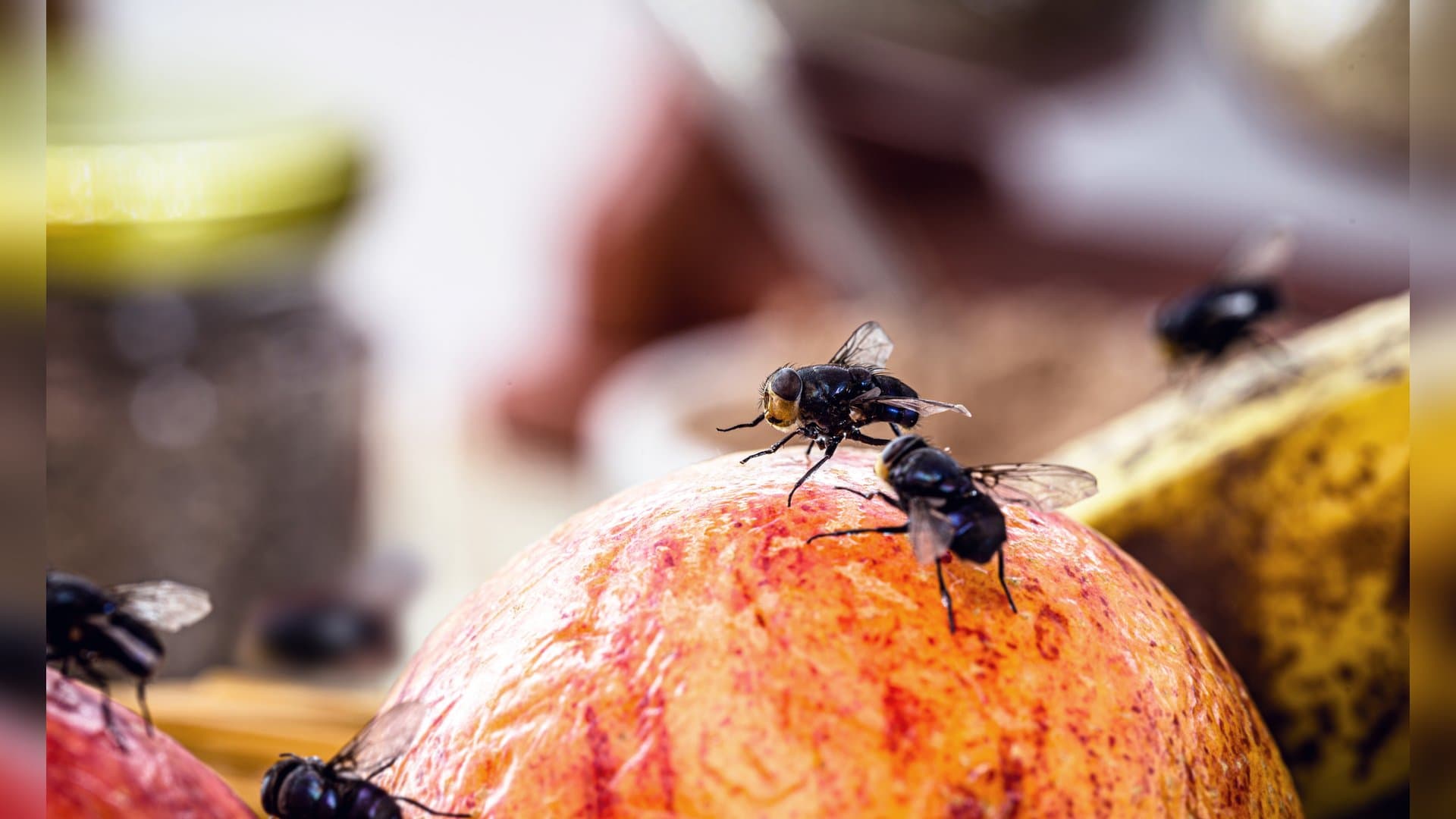
Rising temperatures not only create a summer atmosphere, but also ideal conditions for unwelcome guests in the kitchen. Fruit flies suddenly buzz around the fruit bowl, maggots can develop in organic waste, and pantry moths also have an easy time during the warm season. With proper food storage and a few simple hygiene measures, these pests can usually be avoided.
Why Pests Have Peak Season in Summer
Heat accelerates the reproduction of many insects. At the same time, food spoils faster and organic waste begins to ferment more quickly - ideal conditions for fruit flies and other pests. Even small food scraps or overripe fruit are enough for these creatures to settle in.
Fruit Flies Love Ripe Fruit
Fruit flies are attracted to fermenting and overripe foods. Particularly popular are bananas, berries, grapes, or open bottles of juice, wine, or vinegar.
To prevent them from reproducing in the first place, overripe fruit should be consumed or disposed of as quickly as possible. Cut fruit should be refrigerated in summer, work surfaces should be cleaned regularly, and sticky residues should be removed immediately.
If fruit flies are already in the kitchen, a simple vinegar trap can help: Pour some apple cider vinegar with a drop of dish soap into a glass. This reduces the number of flies - however, it's more important to eliminate the actual source.
Maggots Usually Develop in Organic Waste
Maggots are the larvae of flies. They develop when flies lay their eggs on organic waste - especially at high temperatures, this can happen within a few days.
Therefore, organic waste should be emptied daily or at least every two days in summer. It's also helpful to line the bottom of the bin with paper towels or newspaper to absorb excess moisture. After emptying, the trash can should be rinsed regularly with hot water and household cleaner and then dried thoroughly.
Pantry Moths Hide in the Cupboard
Pantry moths also appear more frequently in summer. They often enter the household through infested products such as flour, oatmeal, rice, nuts, dried fruit, or pet food.
Anyone who sees small moths flying through the kitchen or discovers fine webs in packages should carefully inspect all dry supplies. Infested food belongs in the regular trash and should ideally be taken outside immediately. Afterwards, it's recommended to vacuum and wipe down cupboards thoroughly.
To prevent infestation, dry foods should be stored in tightly sealed glass or plastic containers rather than in opened paper or plastic packaging.