Why does bright red lipstick look particularly good on some people and less so on others? Eyeliner or dark eyeshadow can also have different effects depending on the face. Contrast Theory provides an explanation for this - and helps to tailor makeup more specifically to one's own appearance.
How to Determine Your Contrast?
The theory centers on the question of how strongly skin, hair, eyes, and eyebrows differ from each other in color. The greater these differences are, the higher the natural contrast.
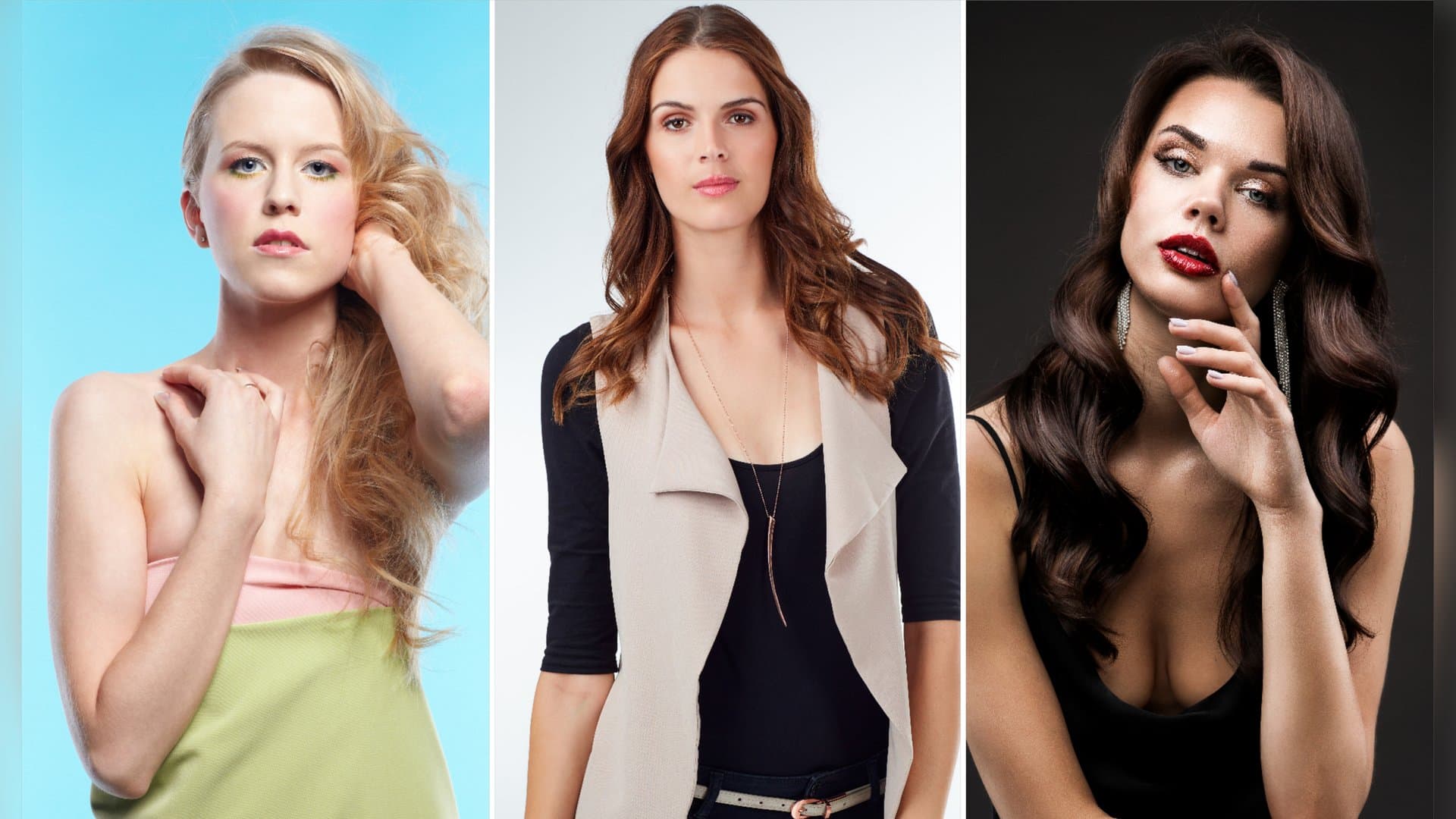
Determining your own type is easier than you might think. A photo must be taken in daylight. Then a black-and-white filter is applied so that the contrasts become visible. If hair, eyes, and eyebrows stand out clearly from the skin, this indicates high contrast. If the facial features appear soft and uniform, there is low contrast. A combination of both is medium contrast.
Tips for High, Medium and Low Contrast
People with a high contrast level - such as those with fair skin and dark hair - can wear more expressive makeup without it looking overdone. A bold eyeliner wing, colorful eyeliner, deep red lipstick or smokey eyes are explicitly encouraged.
Those with low contrast, for example fair skin, blonde hair and light eyes, should according to the theory opt for softer colors instead. Rose and nude tones, brown instead of black mascara, and only gently defined eyebrows emphasize the natural facial features. Highlighter and a peach tone on the cheeks complete the look. For darker skin tones, the principle works the same way - only dark tones matching the skin and hair are called for instead of lighter colors.
In between is medium contrast. This includes, for example, people with medium brown hair and lightly tanned skin, or with light brown hair, fair skin and blue eyes. With this type, it's mainly about giving the face contour without disturbing the natural balance. Too strong light-dark contrasts can quickly appear harsh, while very pale colors weaken the look.
Medium, warm or muted tones such as taupe, bronze, caramel and various brown shades appear particularly harmonious here. On the lips, nuances that are just slightly darker than one's own lip color look natural. Another option: Define the lips with a brown lip liner and apply a transparent gloss over it.
As with all tips, however: Contrast Theory is not a fixed rule, but rather a guide. Those who love bold colors or striking makeup looks as a low-contrast type don't have to give them up. Rather, the theory can help to understand why certain combinations appear particularly harmonious and how to emphasize one's own facial features.